
Cayuga Lake Wine Trail Wine & Herb 2026 — A Rochester Day Trip Guide
The Short Version
- The Cayuga Lake Wine Trail Wine & Herb Festival is in its 32nd year — 11 participating wineries on May 1-3, 2026, each offering herb-paired tastings, a souvenir glass, and recipe cards for $65 per single ticket.
- The $95 couples ticket is the strongest value on the trail — two people visiting five or six wineries works out to under $10 per person per stop, food included.
- Cayuga Lake is Riesling country: the lake's depth moderates the growing season in ways that produce dry-to-late-harvest Riesling that outperforms most northeastern American wine regions, with Cabernet Franc as the leading red.
- Five or six wineries is the right target for a day trip — cluster stops geographically, skip the zigzag across the lake, and plan a real lunch break in the middle of the day.
- Taughannock Falls State Park, mid-lake on the western shore, has a gorge trail to a waterfall taller than Niagara Falls — 20 minutes from the center of the trail and the best non-wine detour on the route.
The Cayuga Lake Wine Trail has been running Wine & Herb for 32 years. That kind of staying power doesn't happen by accident — it happens because the weekend delivers, reliably, year after year. Wineries that have spent three decades refining their herb pairings, tasting room rhythms, and May hospitality are not the same as wineries throwing together a pop-up event. The 32nd annual festival runs May 1–3, 2026, with 11 participating wineries spread along one of the most scenic stretches of water in upstate New York. From Rochester, it's a 90-minute drive — one of the best day trips this region offers.
The question isn't whether to go. It's how to go smart.
What Is Wine & Herb and How Does It Work?
What Is Wine & Herb and How Does It Work?
The format is simple and genuinely good: buy a ticket, visit any or all of the 11 participating wineries over the weekend, and at each stop receive a tasting flight paired with herb-infused food the winery has specifically developed for the event. Your ticket also includes a souvenir glass and, at most stops, recipe cards to take home. It's a tasting event, not a drinking marathon — the pairings are intentional, the portions are modest, and the cumulative experience across the day builds into something more interesting than any single stop could offer on its own.
According to the Cayuga Lake Wine Trail, tickets for the 2026 festival are $65 for a single, $95 for couples, and $45 for designated drivers. The couples rate is particularly strong value — two people visiting five or six wineries across a long Saturday works out to under $10 per person per stop, food included.
Buy tickets in advance. Wine & Herb sells out for the first weekend (April 24–26); the second weekend of May 1–3 typically has better availability, but don't count on walking up.
The 11 wineries are distributed along the western and eastern shores of Cayuga Lake, from the northern end near Seneca Falls south through the most concentrated stretch of the AVA. Each winery's pairing is different — some lean savory (herbed cheese, rosemary flatbread), others toward sweet (lavender shortbread, herb-infused fruit compote). That variation is the point. You're not repeating the same experience at every stop; you're collecting different versions of the same theme across the same afternoon.
Planning Your Route From Rochester

Planning Your Route From Rochester
Cayuga Lake runs roughly north to south, stretching 61 miles. The Cayuga Lake Wine Trail's participating wineries cluster along the northern half, with the greatest concentration between Cayuga village and Ovid. From Rochester, the drive to the northern entry point near Seneca Falls is approximately 85–90 minutes via I-90 west to Route 414 south, or Route 14 south through Geneva.
Starting from the northern end lets you drive south as the day progresses, finishing near Ithaca if you want a proper dinner before the return trip. Starting from the southern end means fresh energy for the more remote stops and easier highway access as the day closes. Neither is wrong. What matters most is clustering your stops geographically rather than zigzagging across the lake — crossing from one shore to the other can burn an hour of driving with nothing to show for it.
Approximate drive times from Rochester to key anchor points along the trail:
Aim for five or six wineries, not eleven. The wine trail experience rewards the pause — a slow conversation with a winemaker, a second pour of something that surprised you, a few minutes on a deck with the lake in view. Eleven stops in one day becomes a checklist. Five or six becomes a trip worth remembering.
Build your cluster around shared geography: three or four wineries within a ten-minute drive of each other, then two more nearby. The Cayuga Lake Wine Trail's winery map makes cluster planning straightforward. What stops would you regret passing without knowing what they'd poured?
What to Eat, Drink, and Expect at Each Stop

What to Eat, Drink, and Expect at Each Stop
Cayuga Lake is Riesling country. The lake's depth moderates the local climate in ways that stretch the growing season and buffer the coldest winter temperatures — conditions that make it one of the most reliable environments in the northeastern United States for German-style white varieties. Riesling planted here ranges from bone dry to late-harvest sweet, and the variation within a single varietal across three or four stops is worth chasing for its own sake.
On the white side, Gewürztraminer, Chardonnay, and Cayuga White — a hybrid developed at Cornell specifically for this climate — round out what local producers do best. On the red side, Cabernet Franc performs consistently here in a way it rarely does in northeastern American wine regions: herbal and savory rather than heavily fruit-forward. For a festival built around herbs, that alignment is not a coincidence. According to the New York Wine & Grape Foundation, Riesling is the dominant planted vinifera across the Finger Lakes AVA, with Cabernet Franc leading among reds.
Finger Lakes vinifera plantings by variety (approximate), per the New York Wine & Grape Foundation:
The herb pairing concept works better than standard trail-event food because it's designed to move with wine rather than compete with it. Rosemary in a white bean dip doesn't fight a dry Riesling — it mirrors the wine's herbal edge and makes both taste cleaner. Lavender in a butter cookie pulls out the floral character in Gewürztraminer. Thyme with a sharp aged cheese softens Cab Franc's tannins. The pairings are not decorative. They've been thought through by winemakers who have been doing this for years.
The tasting room vibe on a wine trail festival day is different from a standard Saturday tasting. These wineries are staffed and ready for the pace. Take time to ask about what you're tasting. The people behind the bar are not hospitality placeholders — they're the people who made the wine, or who work alongside the people who did.
"Small wineries on wine trails are rarely filler stops. They're the ones where the winemaker is still in the building, and sometimes still in the tasting room."
Don't skip the ones that look modest on the map.
Making It a Full Day — Beyond the Wineries

Making It a Full Day — Beyond the Wineries
Lunch deserves real planning. If you're running a northern cluster, Seneca Falls and Aurora both anchor good midday stops. Aurora, on the eastern shore of Cayuga Lake, is a 20-minute detour from the heart of the northern trail — a small village with independent restaurants and a pace that makes for a proper reset between morning and afternoon tastings. For southern clusters, the Ithaca Commons provides enough range to satisfy most preferences.
The rule is simple: eat a real meal somewhere in the middle of the day. Not a pairing snack between stops — a full lunch. It changes how the afternoon half of the trail feels, and it changes how clearly you remember what you tasted.
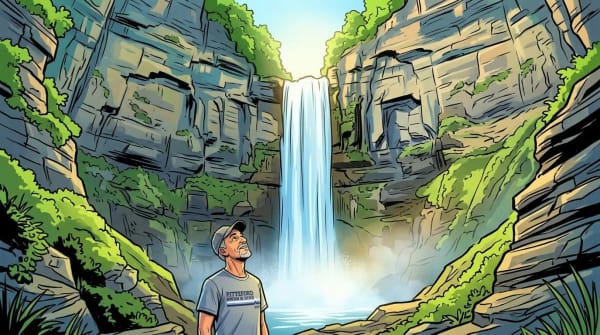
The scenic detours cost nothing and are worth it. Route 89, which runs along the western shore of Cayuga Lake between Seneca Falls and Ithaca, is one of the finer drives in upstate New York — lake views opening and closing between farms, stands beginning to reopen for the season, a pace that slows naturally. Taughannock Falls State Park, roughly mid-lake on the western shore, has a gorge trail leading to a waterfall taller than Niagara. It's 20 minutes from the center of the trail and clears the head between tastings in a way nothing else does.
On buying: don't open your wallet at every stop. Take notes instead. Visit, taste, note the bottle you'd want at home, and make purchases at the end of the day from the one or two wineries that most impressed you. Buying a half-case from a single producer typically earns a 10–20% discount at cellar door prices, and the wines you buy at the source won't be on any Rochester shelf.
The Finger Lakes is the gravitational center of New York wine. Here's how it compares to other state wine regions by approximate winery count, per the New York Wine & Grape Foundation:
What's available at Wine & Herb on a single weekend is a concentrated version of that depth: 11 producers, one shared theme, one of the best drives in upstate New York, and 90 minutes from home. The festival has been running for 32 years because people come back. What would bring you back?
Content ID: D7czuIn3fepFfloCvqHKjrnX
See an error? Tell us.
Comments
Share with the Community