
Why Skaneateles Is Worth Visiting in Winter (And Why You'll Have It Almost to Yourself)
The Short Version
- Skaneateles Lake is so clean that Syracuse draws its drinking water directly from it without filtration — a distinction shared by very few municipalities in the country — and that fact hits differently when you're standing at a silent, still shoreline in January.
- Parking on Genesee Street, a competitive sport in July, is simply open and waiting in winter, which turns out to be the most honest signal of what the off-season actually gives you.
- The Sherwood Inn has been receiving guests since 1807, and staying there in winter means lower rates, no booking scramble, and enough quiet to actually hear the wide-plank floors beneath you.
- Victorian architecture that gets used as backdrop in summer becomes the main event in January — the Federal-style cornices, deep porches, and historical markers nobody reads in August are finally yours to study.
- Finger Lakes wineries within twenty minutes of Skaneateles stay open through winter, and a tasting room in January has a quality of conversation that summer crowds make structurally impossible.
There's a moment, pulling into Skaneateles on a grey January afternoon, when you realize something has been given back. The parking spots on Genesee Street — the ones that are a competitive sport in July — are just sitting there. Open. Waiting. The village exhales. And suddenly, why Skaneateles is worth visiting in winter becomes less of a question and more of an obvious, quiet fact. This is what the town actually feels like when it belongs to the people who love it quietly, and briefly, you get to be one of them.
The Village in Winter: Snow, Silence, and Victorian Architecture You Can Finally See
The Village in Winter: Snow, Silence, and Victorian Architecture You Can Finally See
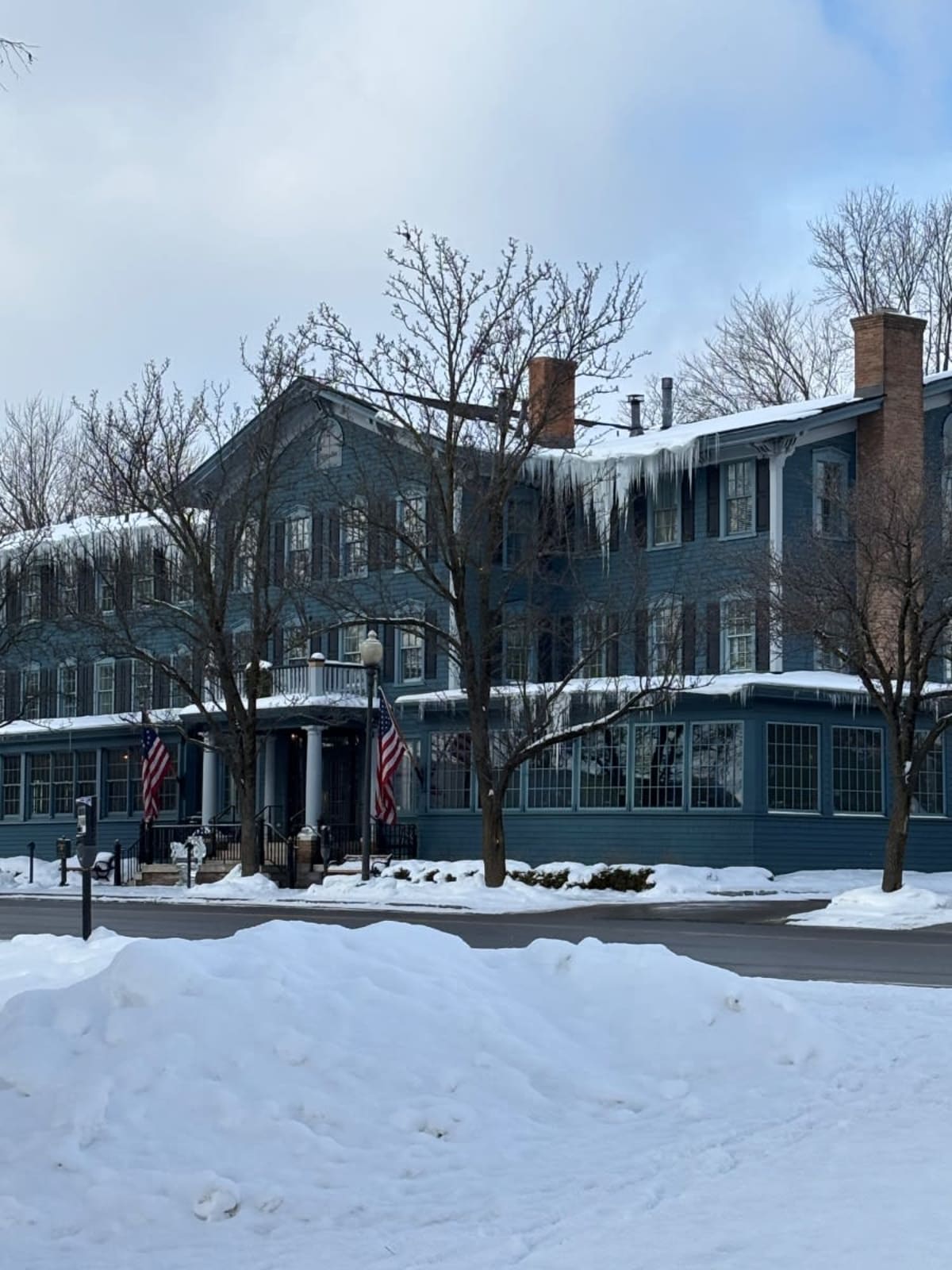
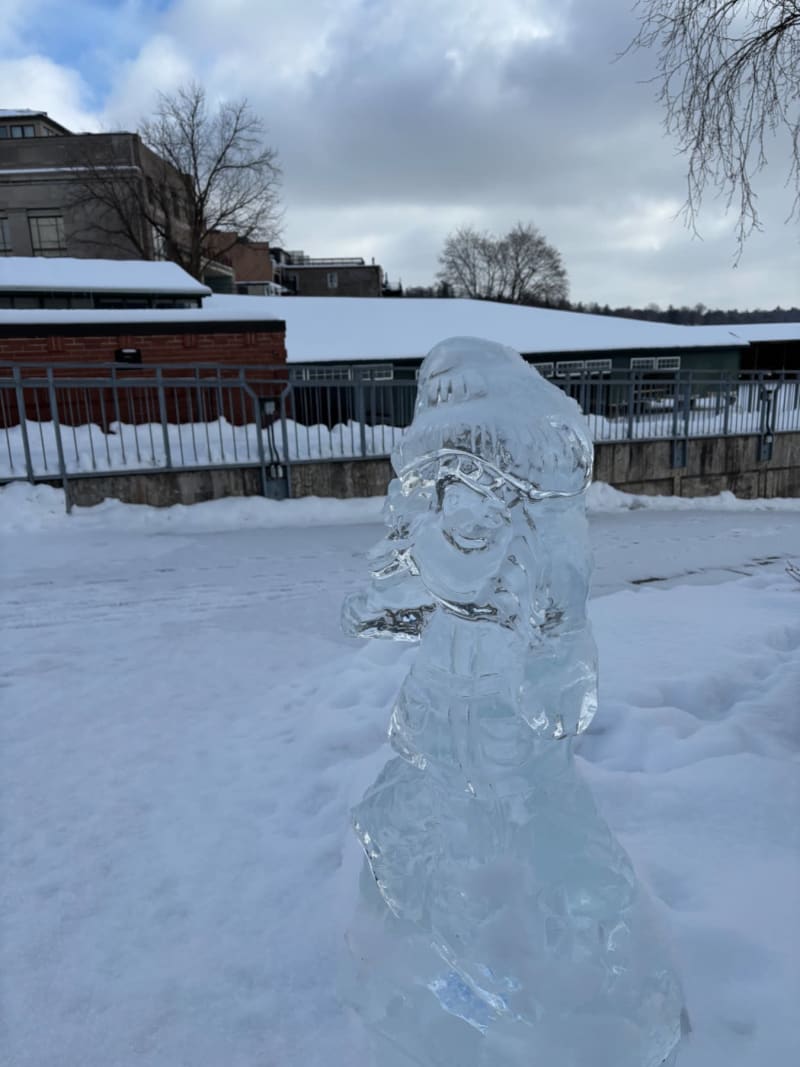
Snow settles on the clapboard facades along Genesee Street in a way that feels almost deliberate, like the village dressed up for an audience of almost no one. The American flags at the Sherwood Inn go still in the cold air. The storefronts — Federal-style cornices, deep porches, window trim that somebody's great-grandparent once painted — stand there fully visible, fully themselves, waiting for you to actually look at them.
In summer, you don't really see Skaneateles village in winter because you're too busy managing the crowd around you. You're peering over someone's shoulder, stepping around a stroller, trying to find a place to stand that isn't someone else's photograph. The architecture becomes backdrop. In January, it becomes the thing itself.
This is the gift the village offers off-season visitors, and it has nothing to do with what's missing. The emptiness isn't a deficiency — it's the condition that finally lets you be present. The Victorian streetscape that makes Skaneateles one of the most visually intact villages in upstate New York (the Historic Preservation Office of New York State recognizes the Skaneateles Historic District for exactly this reason) has always been here. Winter just clears the frame.
Walk slowly. Stop in front of buildings you'd normally hurry past. Read the historical markers nobody reads in August. Notice the proportions of things — the way the village is scaled for human beings rather than for traffic. It rewards the kind of attention you actually have when you're not competing for space.
What would you see in this village if you gave yourself permission to move at its winter pace?
The Lake in the Off-Season: Why Skaneateles Lake Looks Different (Better) in January
The Lake in the Off-Season: Why Skaneateles Lake Looks Different (Better) in January
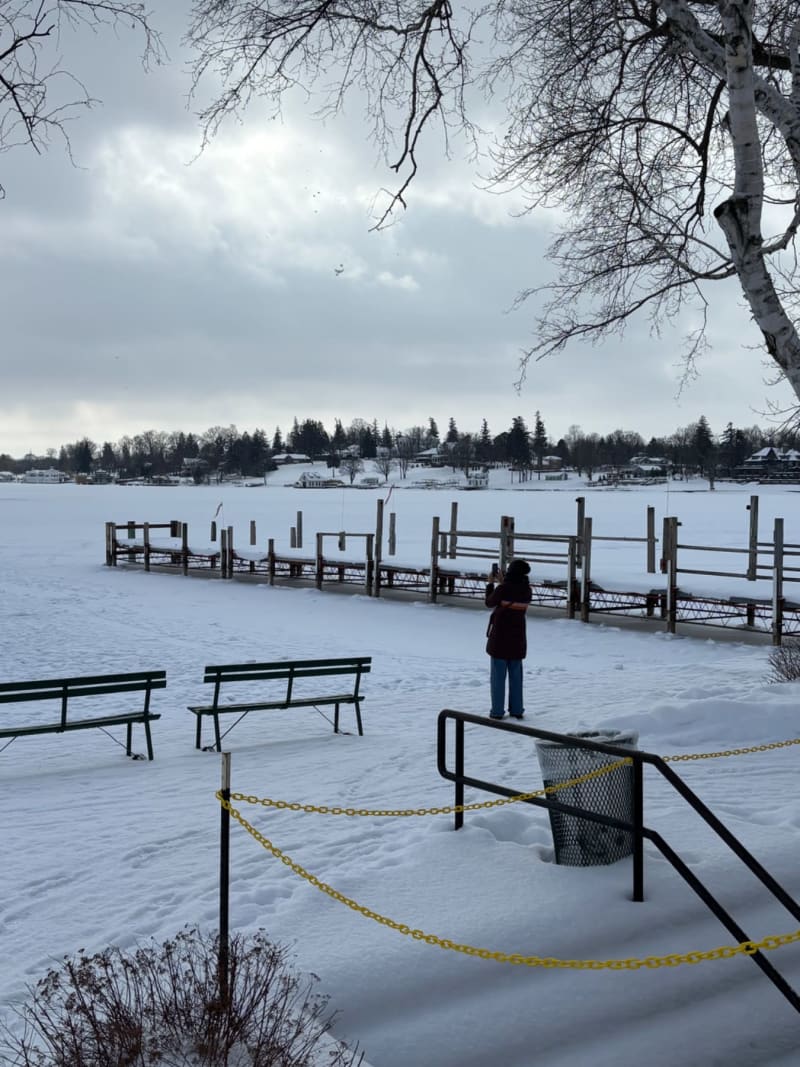
Skaneateles Lake off-season is silver-grey in a way that photographs can't quite capture and that summer visitors never see. The water, which in July is crowded with motorboats and kayaks and the general cheerful racket of a Finger Lakes summer, goes still and enormous. The edges frost over. The light flattens in that particular winter way — not dramatic, not golden-hour gorgeous, just deeply, quietly present.
The lake returns to itself in winter, and there's something in that worth sitting with.
Skaneateles Lake is one of the cleanest lakes in the United States — the city of Syracuse draws its drinking water directly from it without filtration, a distinction shared by very few municipalities in the country (U.S. Environmental Protection Agency, epa.gov). That fact lands differently when you're standing at the shore in January, the water clear and still, no wakes disturbing it. You're looking at something genuinely rare. The performance of summer — the boats, the swimmers, the buoys — is lovely, but it's also a kind of noise laid over what the lake actually is.
In winter, you hear the lake. Or rather, you hear the silence around it, which is its own kind of presence.
For walking: the Skaneateles lakefront park on State Street gives you an unobstructed approach to the water and a view down the length of the lake toward the hills to the south. It's accessible in winter, rarely icy when the temperatures hover in the twenties, and almost entirely empty on a weekday morning. Go before 9 a.m. if you want the full experience of having twelve miles of glacially carved lake to yourself.
When you visit a lake, what are you really looking for — the spectacle of summer, or the presence of the water itself?
Where to Eat When You Don't Need a Reservation: Uncrowded Restaurants Worth Knowing
Where to Eat When You Don't Need a Reservation: Uncrowded Restaurants Worth Knowing
Here's something that doesn't happen in August at Skaneateles restaurants: the server sits down across from you. Not literally — but almost. In winter, there's a pace to a meal here that summer crowds make impossible. The staff have time to tell you what's good. You have time to ask. The transaction becomes something warmer.
The Sherwood Inn dining room in winter is exactly what a dining room in a historic inn in upstate New York in January should be — dark wood, unhurried service, a menu that leans into the season. Order something with local ingredients and something warm. The soup is always the right answer in January. The dining room, which has been operating in some form since the inn was established in 1807 (sherwoodinn.com), carries that accumulated sense of a place that has fed a lot of people through a lot of winters. That's not nothing.
Bluewater Grill, which sits right on the lake, is worth visiting in winter for the view alone — but the food holds up. A table by the window in January, the grey lake visible through the glass, a bowl of chowder in front of you: this is not a diminished experience. This is the experience.
Ask around about what's open — Skaneateles is small enough that locals will just tell you, directly and honestly, where to go on any given Tuesday in February. That conversation is part of the meal, even before you sit down. In winter, Skaneateles restaurants slow to a pace where you briefly become part of the community rather than a tide of visitors passing through it.
Where to Stay: The Sherwood Inn and the Case for a Slow Weekend

Where to Stay: The Sherwood Inn and the Case for a Slow Weekend
The Sherwood Inn is blue clapboard and icicles in January, flags hanging still from the porch, and from the outside it looks like exactly what it is: a place that has been receiving guests for over two centuries and is not particularly flustered about any of it. The fireplace inside delivers on the promise the exterior makes. Staying here in winter rather than summer is one of those decisions that sounds modest and turns out to be significant.
Here's the case for the Sherwood Inn Skaneateles in winter, practically speaking: rates are lower, rooms are available without planning your life around a booking window, and the inn itself is quieter in ways that make the historic bones of the building audible. You notice things — the wide-plank floors, the way sound moves through old walls — that summer crowds absorb and neutralize.
But the more important case is this: staying overnight changes your relationship to a place. You stop being a visitor and start being, briefly, a temporary resident. You wake up in Skaneateles. You have coffee in the village before anyone else is moving. You walk to the lake at 7 a.m. and have it to yourself. Day-tripping is fine — I say this as someone who has absolutely driven two hours to a place, spent ninety minutes, and driven home feeling vaguely cheated — but it keeps you permanently in the role of outsider. Staying lets you belong to the place for a weekend.
Book a Friday and Saturday. You probably don't need to book further in advance than a week or two, in January. That alone feels like a gift.
What to Do (Besides Nothing, Which Is Also Valid): Winter Activities Around the Finger Lakes
What to Do (Besides Nothing, Which Is Also Valid): Winter Activities Around the Finger Lakes
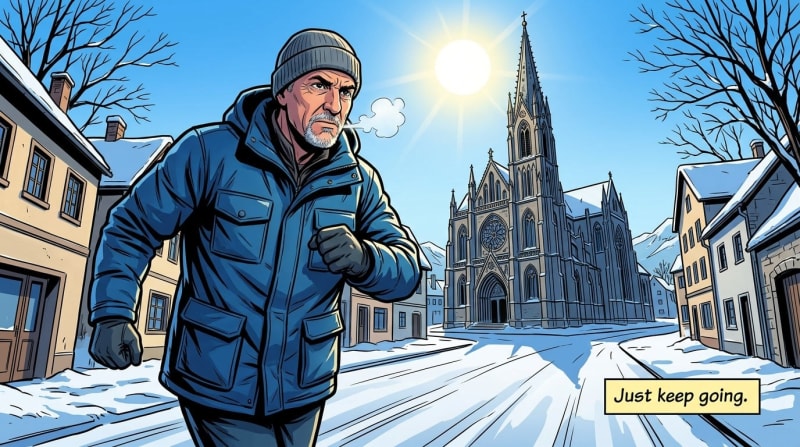
Let me be honest about something: I have, on previous travels, felt the low-grade anxiety of not doing enough. Of being in a place with a list of things to do and the creeping sense that I was failing to optimize my presence there. Skaneateles in January is a corrective to this. The town does not rush you. It does not perform for you. The pace it offers is the activity.
That said, there are things to do, and Finger Lakes winter activities are more varied than the region gets credit for.
Walk the main street without a single moment of pedestrian traffic negotiation. This is underrated. Several Finger Lakes wineries — including some within twenty minutes of Skaneateles — remain open through winter, and a tasting room in January has a quality of conversation that summer crowds make impossible. The Finger Lakes Wine Country Tourism Marketing Association (fingerlakeswinecountry.com) maintains a current list of what's open off-season, and it's worth checking before you go.
Ice fishing is a genuine cultural practice in this region, not a novelty. Locals fish Skaneateles Lake and surrounding waters through the winter months, and if you've never watched someone sit in focused patience above a hole in the ice, it's a useful reminder that some forms of attention look like doing nothing from the outside.
If you're visiting in December, Skaneateles hosts a Dickens Christmas celebration that draws visitors from across the region — costumed characters, carolers, the whole affair — and it's genuinely charming rather than begrudgingly festive.
But here's the real question: what pace of travel do you actually want? Because a town that "does less" in winter might be offering you exactly that — less — as the gift rather than the limitation.
Who Skaneateles in Winter Is Really For (And Whether That's You)
Who Skaneateles in Winter Is Really For (And Whether That's You)
This Skaneateles travel guide should probably be honest about the following: if you're coming for beach weather, boat rentals, a buzzing main street, or a packed social itinerary, January is not your month. The lake is not swimmable. The parasail is stored somewhere. The line outside the ice cream place doesn't exist because neither does the ice cream place, in January.
What you will get is different, and it's worth naming directly.
You'll get a village that stops performing for tourists and lets you see what it actually is. You'll get a lake that belongs to the landscape rather than to the summer economy. You'll get meals where someone has time to talk to you. You'll get architecture, and silence, and the specific quality of winter light on water that painters have been trying to capture for centuries and that you can just go stand in front of for free.

Skaneateles in winter is not a destination you consume — it's a community you briefly join. And the people who tend to find that valuable are the ones who have started to notice, quietly, that the most crowded version of a beloved place is rarely the truest one. That belonging somewhere, even temporarily, feels different from passing through it. That a slow weekend in a beautiful village in January might be exactly the thing you didn't know you were looking for.
Are you the kind of traveler who wants to find a place at its most itself? Because that's what Skaneateles offers in winter, and why Skaneateles is worth visiting in winter is, at its heart, a question about what you're really after when you travel.
Skaneateles in winter doesn't ask anything of you — no itinerary to execute, no crowds to navigate, no performance of having been somewhere worth performing. The village is simply there, exhaling, silver-grey at the lakeshore, warm inside the inn, quieter than you expected and more itself than it ever gets to be in August.
Come in January. Walk to the lake before anyone else is up. Watch the light on the water. See what a beloved place looks like when it finally gets to rest — and notice what it's possible to feel when you let yourself rest along with it.
Content ID: Rb9qElZlqA50xPDsU8yeITKC
See an error? Tell us.


Comments
Share with the Community