Deadzoning: The 2026 Travel Trend That Is About Logging Off for Real
The Short Version
- Deadzoning — intentionally traveling to places with no cell service or Wi-Fi — is the breakout travel trend of 2026, named by HuffPost and Priceline as a direct response to years of always-on culture.
- The data is substantial: #slowtravel posts on TikTok grew nearly 330% in 2025, and the No. 1 reason people say they want to travel in 2026, per Hilton's annual trends report, is simply to rest and recharge.
- The central irony of the trend is that most people find their off-grid cabin on TikTok — which is not a reason to dismiss the aspiration but rather a measure of how deep the hunger for slowness has become.
- Slow travel in practice looks like one place instead of eight cities, a walkable neighborhood, cooking in, trains over rental cars, and enough unscheduled time for a place to actually arrive — a pattern that produces more genuine experience than any optimized itinerary.
- The most durable form of deadzoning is not a vacation booking but a life design question: what would it take to build slowness into the ordinary rhythm, not just the two weeks a year when you escape it?
The Cabin He Found on TikTok

The Cabin He Found on TikTok
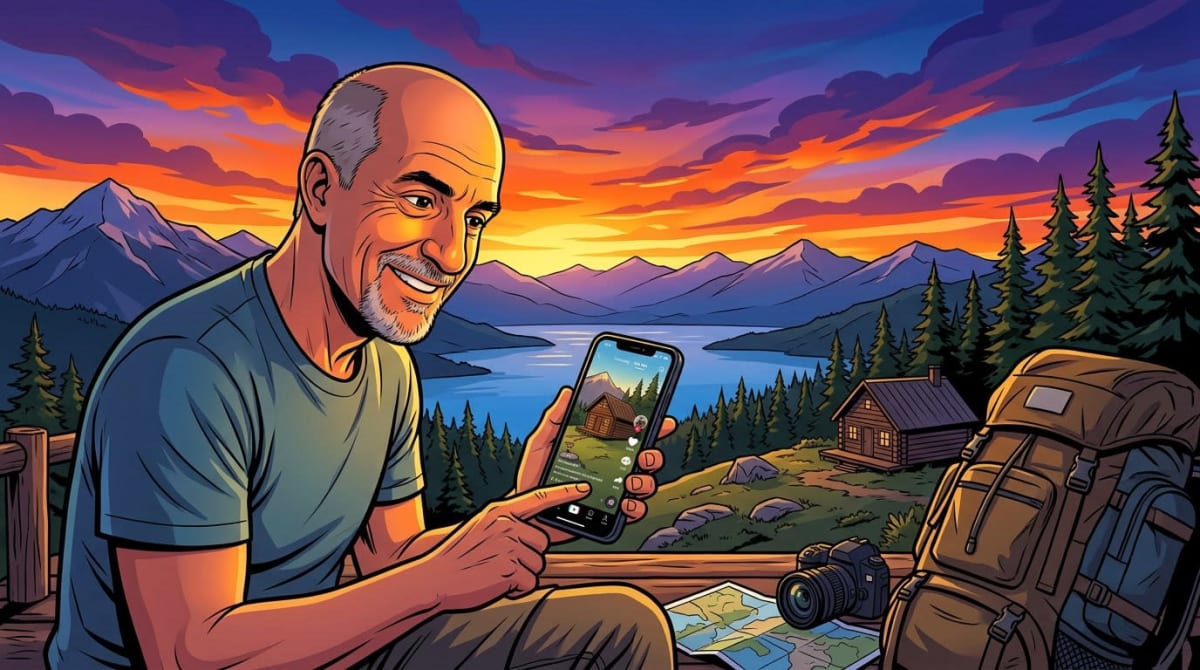
He booked the off-grid cabin to escape the algorithm. He found it six weeks ago on TikTok.
That contradiction is the defining irony of deadzoning — the breakout travel trend of 2026 — and it is worth sitting with before we dismiss it. The word itself comes from the practice of intentionally traveling to places with no cell service, no Wi-Fi, no Slack pinging at 11pm, no Instagram stories to curate. According to HuffPost's coverage of the trend, deadzoning is "the art of switching off and traveling in intentional silence" — a response to what Christina Bennett, a consumer travel trends expert at Priceline, describes as years of being "always on."
The irony is not a reason to dismiss the aspiration. If anything, it is proof of how deep the hunger for slowness runs — deep enough that people will spend hours online researching how to get offline. The deadzoning travel trend is real, it is growing, and it is pointing at something worth paying attention to whether or not you ever book a cabin with a phone lockbox.
The Deadzoning Travel Trend: Why 2026 Is the Breaking Point
The data behind this trend is not subtle.
According to the KAYAK 2026 WTF Report, which surveyed 14,000 Gen Z and Millennial travelers, the hashtag #slowtravel increased nearly 330% on TikTok in 2025. More than half of those surveyed said slower travel clears their heads, with a clear preference for quality over quantity. The No. 1 motivation to travel for leisure in 2026, according to Hilton's 2026 Trends Report, is simply "to rest and recharge." Not to see things. Not to go places. To stop.
The Lemongrass Annual Travel Trend Report 2026 identifies "decision detox" as a defining theme — travelers so exhausted by constant micro-decisions at home that they want someone else to plan everything, or nothing planned at all. Entire businesses have been built around engineering the conditions for disconnection. Unplugged, a company that builds off-grid cabins specifically designed for digital detox, provides phone lockboxes, physical maps, and instant cameras — everything you need once the screen goes dark. Their co-founder Hector Hughes told HuffPost the logic is simple: "It's much easier to be without your phone and laptop when the space is intentionally built for that purpose."
The psychological research supports the instinct. According to Detour's analysis of digital detox travel, people who disconnect go through a predictable cycle: the first 24 hours feel like withdrawal, the next 24 hours feel like calm, and after a few days many guests hesitate to turn their phones back on at all. A short break of four or five days can cut stress levels measurably and lift mood in ways that linger for weeks after returning home.
What Slow Travel Actually Looks Like

What Slow Travel Actually Looks Like
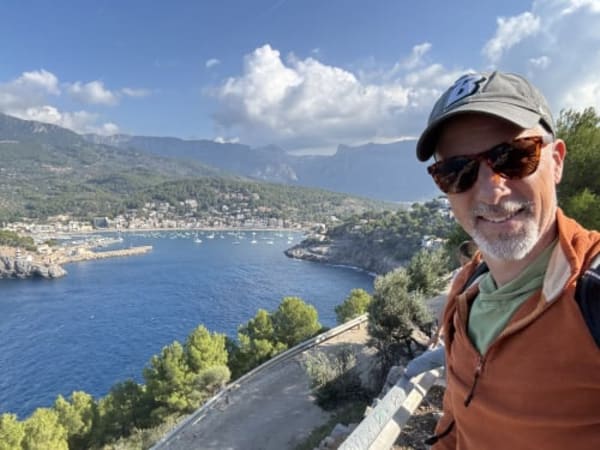
We have been doing our own version of this for years, across about ten trips through Europe, and we did not have a name for it until deadzoning showed up in the conversation.
The pattern is consistent. We pick one place — a village, a neighborhood, a town with a weekly market — and we stay. No itinerary of eight cities in twelve days. No rental car. We find a walkable apartment, learn where the bread comes from, cook most of our meals in, take trains when we need to move, and spend the rest of the time doing essentially nothing at a pace that would look irresponsible to anyone tracking productivity metrics.
What this produces is not boredom. It is the opposite. When you stop moving, you start noticing. the woman at the cheese shop who asks every morning where you are from. The particular light on a stone wall at four in the afternoon. The way a glass of wine tastes when it is not accompanied by seventeen notifications. These are not Instagram moments. They are the actual texture of a place, and you only get access to them by slowing down long enough to let the place arrive.
According to KAYAK's 2026 data, 84% of surveyed travelers say they would prefer a smaller town or rural area for their 2026 trips over a major hub, citing authenticity and lower crowds as the primary draws. That number reflects something real — the exhaustion with optimized, photo-ready, efficiently-consumed travel.
We also keep trips shorter than you might expect from someone who loves travel this much. Rochester is genuinely a wonderful place to live — we are not escaping from anything when we travel. The yoga classes, the pickleball games, the wingfoiling when the wind crew assembles, the walkable village — none of that is something to get away from. Travel is an addition to a life we already like, not a rescue from one we don't.
The Deeper Irony: You Can't Deadzone Your Way to Slow

The Deeper Irony: You Can't Deadzone Your Way to Slow
Here is the thing the deadzoning trend gets close to but does not quite say: the cabin with the phone lockbox works because it forces the conditions. But forced disconnection and chosen slowness are different experiences.
The most honest version of the deadzoning conversation is not about a specific vacation. It is about the relationship you have with pace in your ordinary life. The people most desperate for a deadzoning escape tend to be people whose everyday rhythm offers no version of it — who are always on, always optimizing, always reachable, and who need an extreme environment to interrupt the pattern.
That is a solvable problem, but the solution is not primarily a travel booking. It is a life design question. Reader's Digest's 2026 travel trend analysis describes the broader shift as "slow, intentional and preferably with devices in Do Not Disturb mode" — but notes that this is about a whole orientation toward experience, not just a vacation style. Shannon Stowell, CEO of the Adventure Travel Trade Association, summarizes it plainly: travel in 2026 "prioritizes well-being, simplicity and regenerative depth."
What does regenerative depth look like? It looks like a morning yoga class on a Tuesday that nobody scheduled around. It looks like an afternoon pickleball game that starts when people show up and ends when they don't. It looks like cooking dinner because you want to, not because you planned to. It looks like walking to the market because the village is walkable and that is simply how things work.
"Deadzoning isn't about punishment or proving you can survive without your phone. It's about engineering a break that feels genuinely different from your normal life."
— HuffPost, April 2026
The people who find deadzoning most transformative are often the ones discovering for the first time what it feels like to be present. The people who find it least remarkable tend to be the ones who have already found a version of it at home.
What would it take to build a little more slow into the life you already have — not just the two weeks you take off each year?
What Becomes Possible When Slow Is Just How You Live
What Becomes Possible When Slow Is Just How You Live
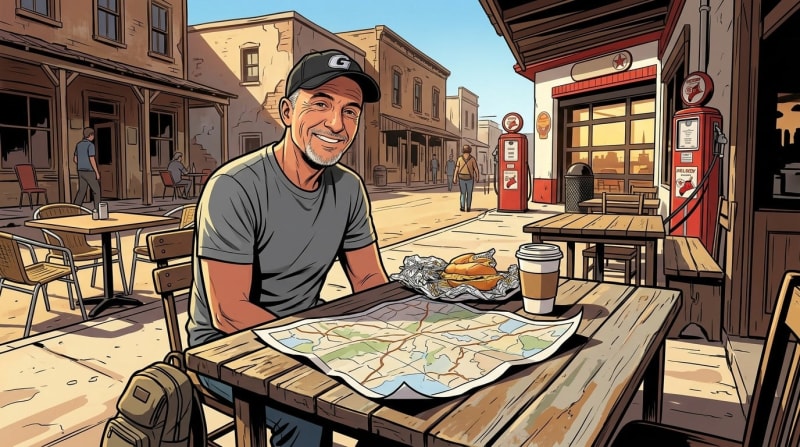
There is a version of the deadzoning conversation that is transactional: book the right cabin, come home refreshed enough to endure another quarter. That version misses the point.
The more interesting possibility is that slowness is not a destination. It is a practice. And like most practices, it compounds. Ten years of slow European travel has changed how we move through any place — the instinct to stay rather than collect, to eat where locals eat rather than where guidebooks point, to let a day become what it wants to be rather than what we planned.
That same instinct travels home. Semi-retirement has been, unexpectedly, the most compelling argument for slowness I know. When the morning is not owned by a commute and the afternoon is not owned by a calendar, you discover what you actually want to do with time. It turns out that what most people want — given the genuine option — looks a lot like what the deadzoning trend is selling: present, unhurried, connected to the specific place and people in front of them.
The off-grid cabin is one way to get there. Building a life that does not require an escape is another.
What would you do with a Tuesday morning if nobody needed anything from you?
Content ID: R9vcXukeGJLa67gUMNKkKOT0
See an error? Tell us.
Comments
Share with the Community