Going to the World Cup Without Being a Fanatic: What You Actually Need to Know
The Short Version
- The 2026 FIFA World Cup runs June 11 through July 19 across sixteen cities in the US, Canada, and Mexico — making it the first World Cup ever hosted by three nations simultaneously.
- Group stage tickets run roughly $50 to $400, and those early matches are where non-fans actually belong: the crowds are international, the stakes aren't yet existential, and conversation starts easily with strangers.
- Tickets aren't even required to experience the tournament — every host city will run official FIFA Fan Festivals with free big-screen viewing, and Miami alone expects 815,000 fans at its fan zone, nearly double the tickets sold for games held there.
- Staying in one host city for five to seven nights and letting the matches come to you is a smarter approach than hopping between cities — it cuts logistics, lowers costs, and lets the place itself become part of the trip.
- Regional pairing is the practical key for anyone who does want to move around: the New York/New Jersey-to-Philadelphia drive is about one hour and forty minutes, and Seattle-Vancouver, Dallas-Houston, and Boston-New York are all within roughly three hours of each other.
Why Non-Fans Should Pay Attention
Why Non-Fans Should Pay Attention
The FIFA World Cup happens every four years. This summer it is happening in your backyard — spread across sixteen cities in the United States, Canada, and Mexico, running from June 11 through July 19, 2026. You do not have to care about soccer to care about this.
Tourism officials have described the World Cup not as a sporting event but as the largest cultural exchange you are ever going to see. That framing is more accurate than the one that puts it in the sports section. What happens at a World Cup — in the streets, in the fan zones, in the neighborhoods around the stadiums — has very little to do with whether you can name a starting lineup.
A 2023 Nielsen study found that 62% of sports fans over 50 value the sense of community with other fans above almost everything else. For a traveler whose interest is in people and place rather than goals and statistics, that is exactly the point of entry.
This is a guide for that person: the curious traveler who wants to be near the thing without becoming an expert in it.
How the Tournament Is Set Up

How the Tournament Is Set Up
The 2026 World Cup will be the first to include 48 teams, expanded from 32, and the first hosted by three nations simultaneously. It runs from June 11 to July 19, with 104 matches across sixteen cities — eleven in the United States, three in Mexico, and two in Canada (Wikipedia, 2026).
Host cities were grouped into three regions: the Western Region covering Vancouver, Seattle, San Francisco, and Los Angeles; the Central Region covering Guadalajara, Mexico City, Monterrey, Houston, Dallas, and Kansas City; and the Eastern Region covering Atlanta, Miami, Toronto, Boston, Philadelphia, and New York/New Jersey. The World Cup Final will be held at MetLife Stadium in New Jersey on July 19, with the semifinals taking place at AT&T Stadium in Dallas and Mercedes-Benz Stadium in Atlanta.
For a non-fan planning around this, the regional structure matters more than any specific match. The Western and Eastern regions each cluster cities within reasonable driving or train distance of each other, which means you can build a trip around a city you already wanted to visit and find the tournament has come to you.
The Group Stage Is Where Non-Fans Belong
The Group Stage Is Where Non-Fans Belong
Group stage matches run from June 11 through June 27, featuring 72 matches across all 48 teams. Ticket prices during this phase are the lowest of the tournament — roughly $50 to $400 — and the atmosphere is festival-like, with multiple games per day and crowds that have not yet narrowed to the partisan intensity of the knockout rounds (KickoffAdventures, 2026).
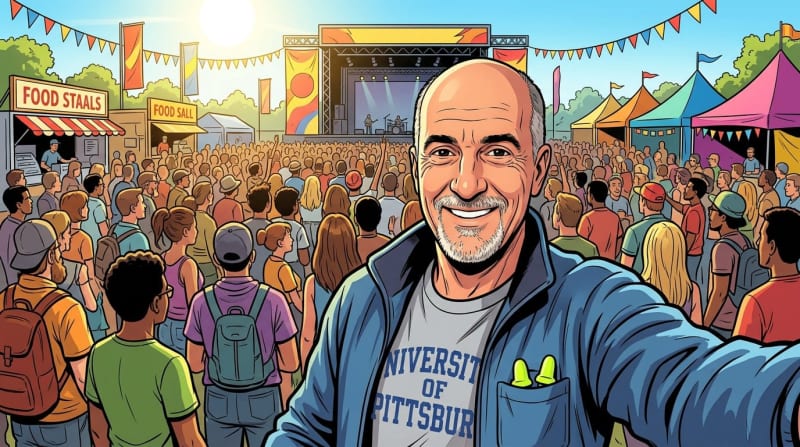
This is the right entry point for someone who wants the experience without being consumed by it. The stakes in group stage matches are real but not yet existential. The crowds are international and diverse. Fans from countries you have never visited sit around you, and because neither of you is from the host city, conversation tends to start easily.
A single host city can offer a complete World Cup experience — multiple group stage matches over five to seven nights, with the city itself becoming part of the adventure in between. Staying in one place simplifies logistics, lets you learn the city, and avoids the cumulative fatigue of packing, flying, and reorienting between stops (Roadtrips, 2026).
For anyone drawn to slow travel principles, this is the same logic applied to a sporting event: base yourself somewhere, go deep, let the tournament come to you.
You Don't Even Need a Ticket
You Don't Even Need a Ticket
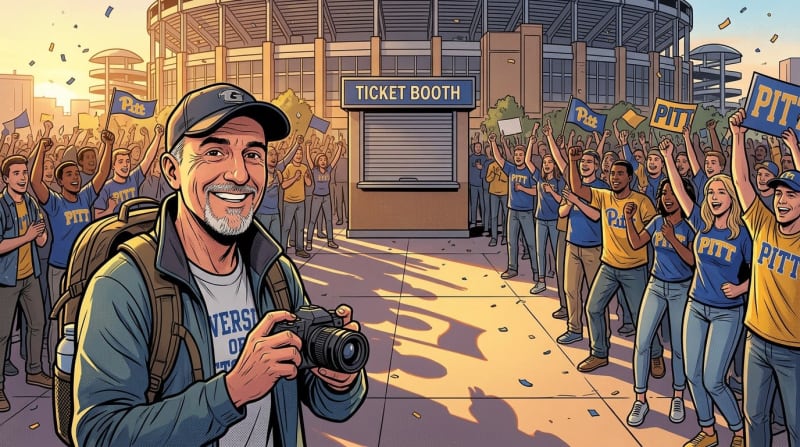
Every host city will hold official FIFA Fan Festivals on match days — free public events featuring live entertainment, big-screen broadcasts of every match, food, community showcases, and family programming. Fan Festivals have been confirmed for all eleven US host cities, plus Toronto and Vancouver in Canada, and all three Mexican host cities (Ticketmaster, 2026).
Miami alone is expecting 815,000 fans at its FIFA Fan Festival — nearly double the total match tickets sold for games held there. The fan zones are, by most accounts from veterans of past World Cups, the better social experience anyway: open entry, mixed nationalities, the kind of spontaneous interaction that closed stadiums and assigned seating tend to suppress.
For group stage matches, or to watch multiple games in a single day, the fan zone delivers something stadiums cannot — shared crowd reactions, no seat assignments, a mixed-nationality social atmosphere that reflects what the World Cup actually is at its best (KickoffAdventures, 2026). The ideal trip combines one or two stadium matches with several fan zone sessions in the same city.
Beyond the official zones, the cities themselves become different places during the tournament. Hotels near stadiums expect their bars and lobbies to become natural gathering hubs, with programming and menus reflecting the international mix of guests. Any neighborhood sports bar in a host city becomes a gathering point. The tournament is ambient — you feel it everywhere, not only inside the grounds.
How to Plan a Trip Around It
How to Plan a Trip Around It
A few practical realities worth knowing before you commit.
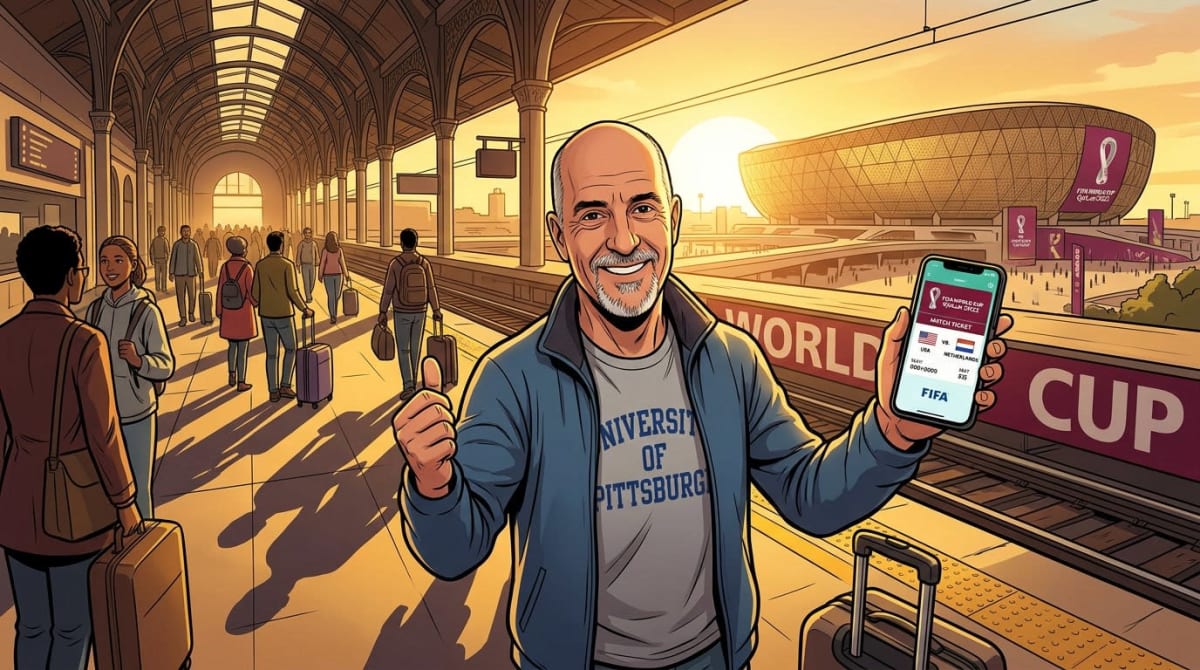
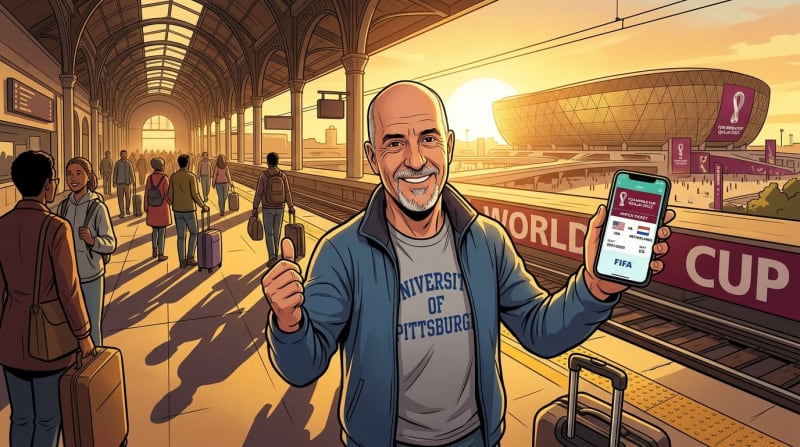
Tickets, if you want them, go through FIFA's official ticketing portal and require a FIFA account. The system uses a phased lottery draw for high-demand matches rather than first-come-first-served sales. Tickets are delivered via the FIFA World Cup 2026 app and must be accepted at least 60 minutes before kickoff — your phone is your ticket. For the group stage, last-minute availability through Ticketmaster is a realistic option throughout the tournament.
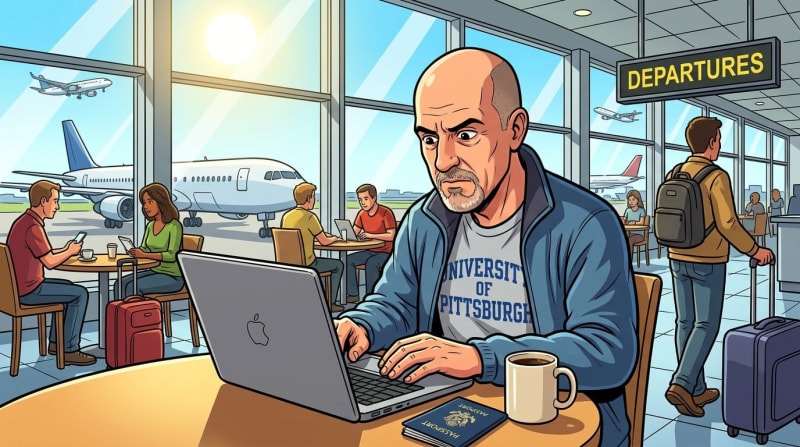
Accommodation in host cities will be significantly more expensive during match weeks. Hotels and short-term rentals in cities like Miami, Los Angeles, and New York will see sharp rate increases during tournament weeks, so booking well in advance — or staying slightly outside the immediate stadium neighborhoods — is worth the planning effort.
Getting around on match days favors public transit. Most host cities will operate extended public transportation services on match days. Trains, buses, and metro systems are the most reliable option — ride-shares and taxis become difficult to find immediately after matches when tens of thousands of fans leave simultaneously.
Regional pairing is the practical key for a multi-stop trip. Cities within about three hours of each other by car include Seattle-Vancouver, Dallas-Houston, Boston-New York/New Jersey, and New York/New Jersey-Philadelphia — the shortest drive at roughly one hour and forty minutes. Staying within one region and traveling between nearby cities is far less expensive and logistically simpler than crossing between regions.
The larger argument for going — even without a team to follow, even without a strong opinion about the sport — is one that every traveler who has been near a World Cup tends to make the same way. The games are the container. What fills the space around them is something harder to plan for and easier to find than you might expect: people from everywhere, gathered around the same thing, with no particular agenda beyond being there. That is not nothing. That is, in fact, close to everything.
Content ID: lq6iLzZkHb1THwYg3GtFzt6p
See an error? Tell us.


Comments
Share with the Community