Hike to Petites Cayes: St. Martin's Most Rewarding Secret Beach
The Short Version
- A bold mongoose stole four sandwiches from an unattended bag and dragged them 40 feet into the mangroves — turns out the Indian mongoose (*Herpestes javanicus*) was introduced to Caribbean islands in the 1800s to control snakes in sugarcane fields and has been shameless ever since.
- Petites Cayes sits inside St. Martin's nature reserve within the Sentier des Froussards, the last intact coastal forest on the island, which means no vendors, no beach chairs, and no cocktail service — that absence is the whole point.
- The round trip is about 3.3 miles with 730 feet of elevation gain, plan on a full four hours including swim time, and the jungle section is lined with cacti that will absolutely find you if you drift off the path.
- Trailhead parking holds maybe five cars, there are no amenities of any kind once you arrive, and a spray-painted arrow near a small shed at the water treatment plant is the key turn most hikers almost miss.
- Past the main beach, a rocky point leads to a series of wilder coves with Anguilla sitting on the horizon — scrambling out there is worth spending a good chunk of the beach time.
There are beaches you drive to, and there are beaches you earn. Petites Cayes is the second kind — and that's exactly what makes it worth it.
I've done this hike twice now, most recently in early April with my wife and son. Both times it delivered something the crowded resort beaches simply can't: the feeling that you've arrived somewhere genuinely wild, genuinely yours for the afternoon, genuinely off the map. If you're the kind of traveler who finds meaning in a little effort before the reward, this one's for you.
What You're Getting Into

What You're Getting Into
This is a 4-hour excursion, start to finish. Plan for roughly an hour in, two hours at the beach (bring lunch — more on that in a moment), and an hour back. The trail itself is about 3.3 miles round trip with around 730 feet of elevation gain. It's not technical, but it's not a stroll either. The jungle section is rocky, steep in places, and lined with cacti that will absolutely remind you they're there if you drift off the path. Come prepared and you'll be fine. Come casual and you'll have a story to tell.


The trail is part of the Sentier des Froussards — the last intact coastal forest on the island — and sits within St. Martin's nature reserve. That designation matters. This place is protected, unhurried, and almost completely undeveloped. There are no vendors, no beach chairs, no cocktail service. That's the whole point.
Getting There

Getting There
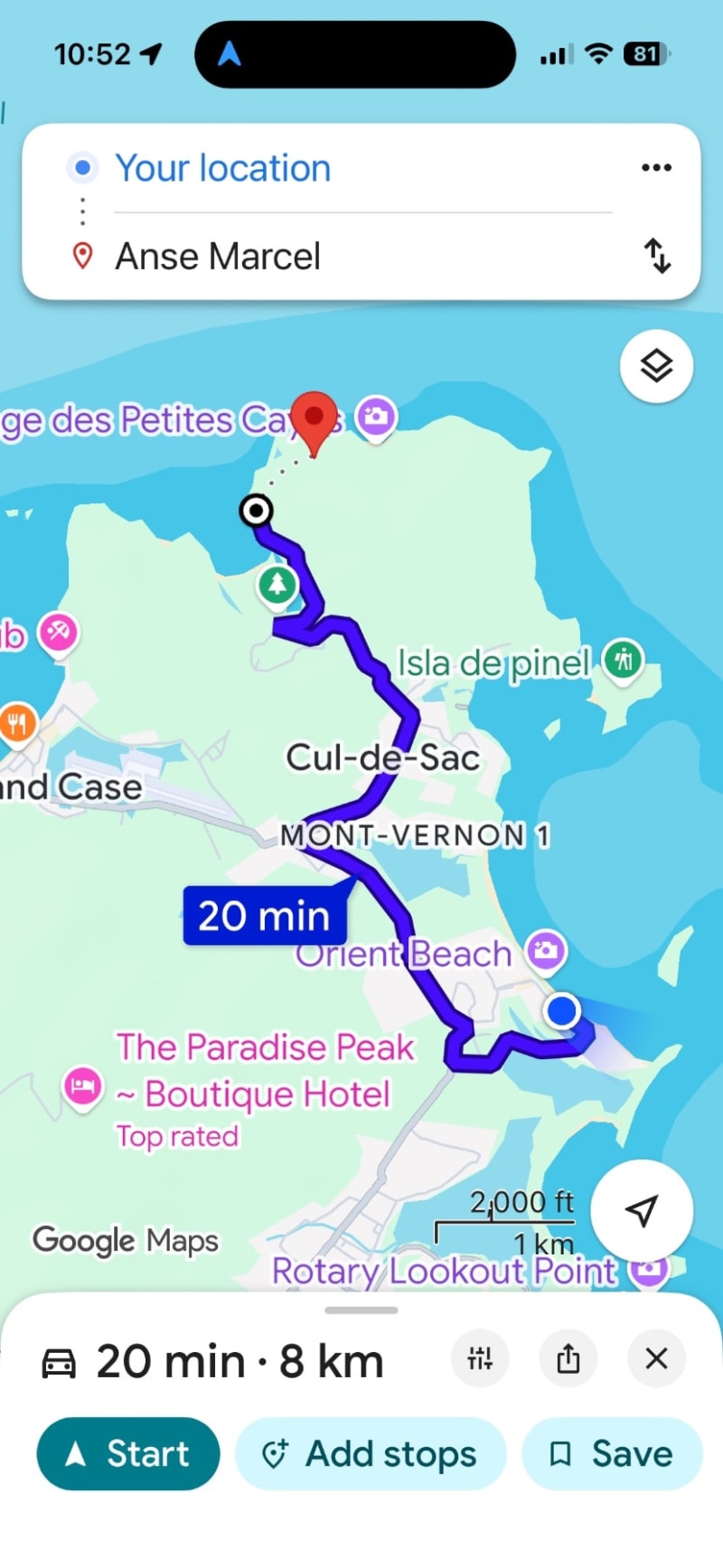
Petites Cayes is on the northwest coast of the French side. You'll need a car or a taxi to reach the trailhead — there's no practical way to get here otherwise if you're staying elsewhere on the island.
Drive to Anse Marcel and head up the hill just above the beach. The trailhead parking lot is small — maybe five cars — and easy to miss on the way down. If it's full, the main Anse Marcel beach parking is a short walk back up the hill.
The Trail: A Natural Checkpoint System

The Trail: A Natural Checkpoint System
What I love about this hike is that the trail essentially gives you landmarks that confirm you're on the right path every step of the way. If you know what to look for, you'll never feel lost.
Step 1: The Chain Gate
At the trailhead you'll find a low chain stretched across the road — maybe knee height — with a restricted access sign. Don't be put off. Step over or around it. This is a well-traveled public trail and the chain simply keeps vehicles out. I have a photo of it that makes this immediately clear.

Step 2: Marina Views Along the Bay
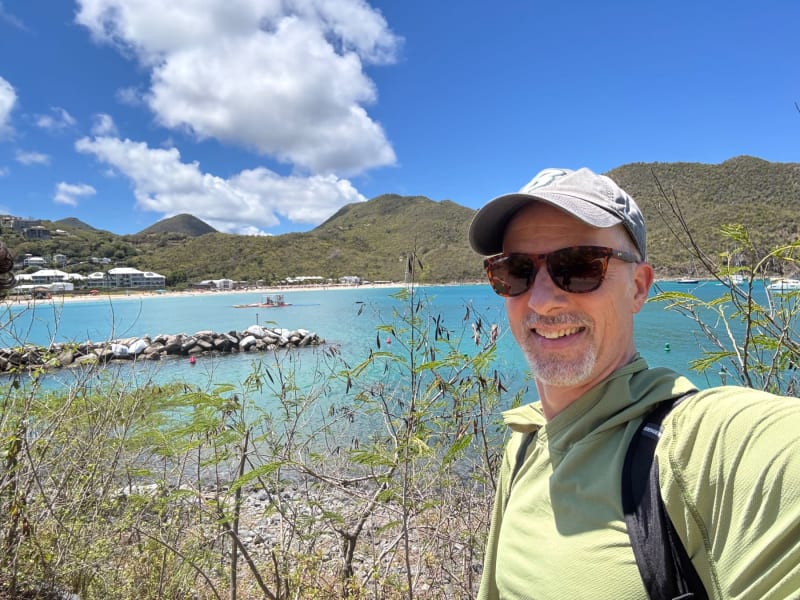
The first 20 minutes or so follow an old double-track road that hugs the hillside above the bay. This section rewards you immediately. To your left, a large marina stretches out below, packed with sailboats belonging to the resort. The views are genuinely beautiful and this is a great spot for your first selfies of the day. You'll know you're heading the right direction.
Step 3: The Resort Beach Comes Into View
As the road bends around the headland, the beachside of the Secrets St. Martin resort appears below you. Another confirmation you're on track, another great vantage point. Pause here. Take it in.

Step 4: The Water Treatment Plant
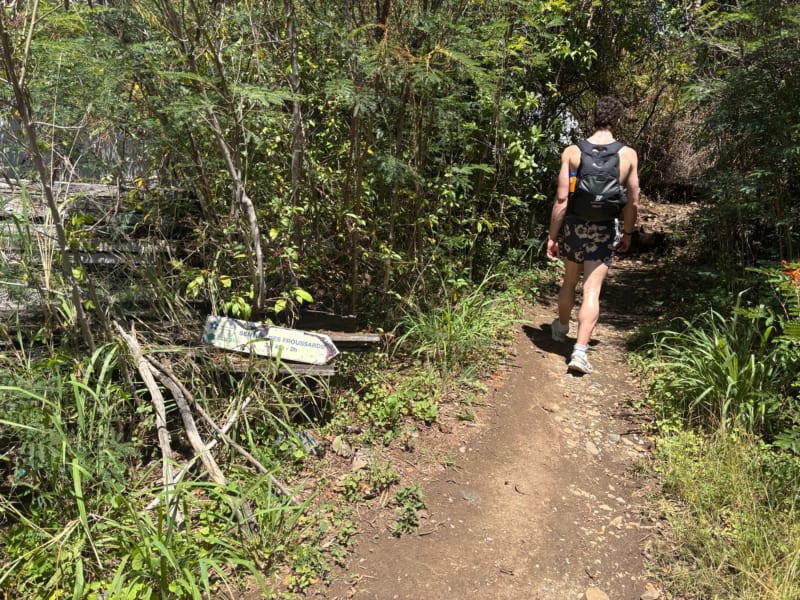
Stay on the road and you'll pass a small sewage treatment plant serving the resort. I promise it's not unpleasant — you'll barely notice it. What you will notice is a spray-painted arrow near a small shed pointing toward "beach." That's your turn. Veer right and the jungle begins.

Step 5: The Trail Fork — Stay Right
A bit further in, the trail splits. Stay right for Petites Cayes. The left fork heads somewhere else — I've never explored it and can't tell you where it goes. Right is your path.

Step 6: Into the Froussards Forest
Now it gets real. The trail narrows, the canopy closes in, and you're climbing. The path is rocky — think dry rain gully — and lined on both sides with impressive cacti. Watch your hands. Don't grab for handholds without looking first. I learned this lesson. The Conservatoire du littoral has placed plant identification signs along the trail, and if you slow down enough to read them, you'll discover you're walking through one of the most ecologically significant patches of land on the island. Keep an eye out for iguanas and hermit crabs making their own way through the undergrowth.
The ascent crests a significant hill — lungs will feel it — and then the trail tilts downward. When the turquoise appears through the trees below you, you'll understand why people do this twice.
Petites Cayes: The Payoff

Petites Cayes: The Payoff
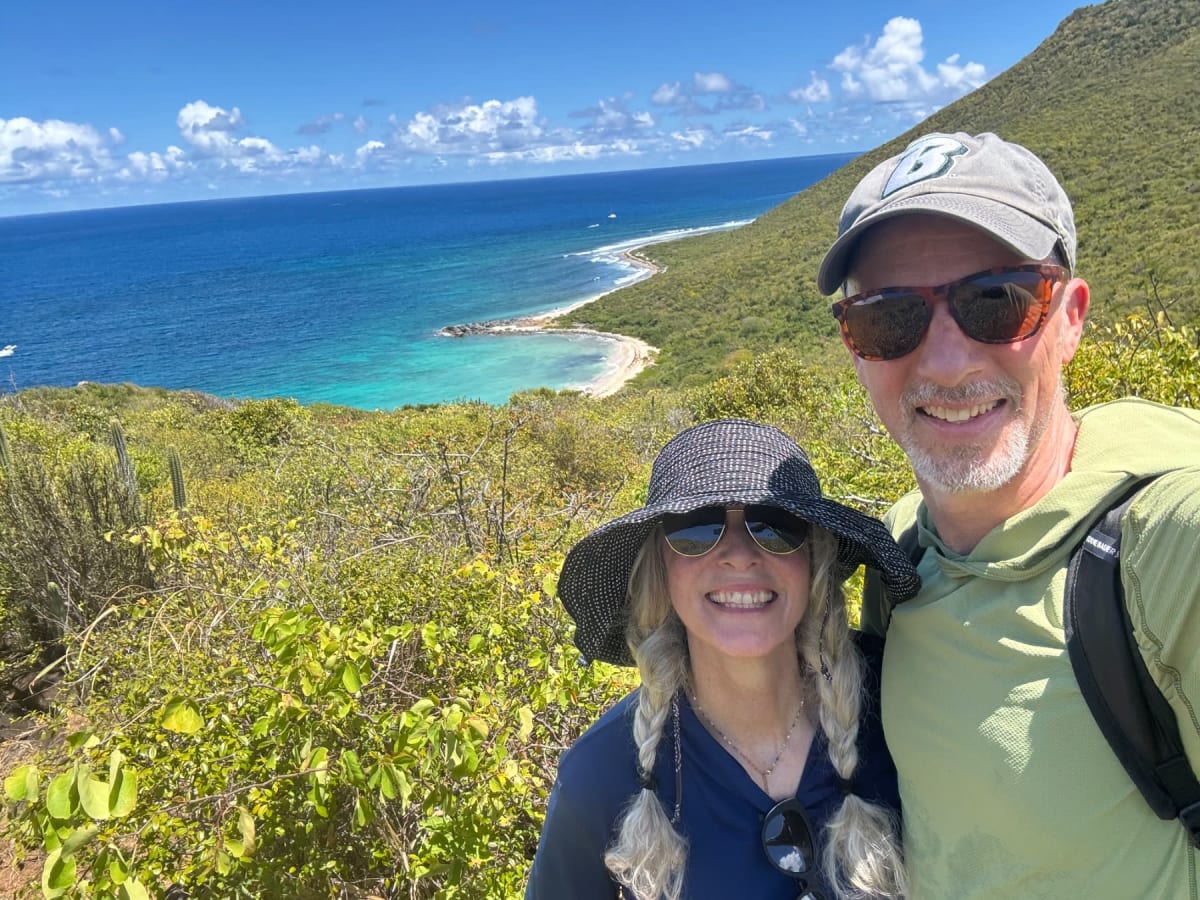
The beach is small, sandy, and almost always empty. The water is that particular shade of Caribbean turquoise that photographs look fake. Waves roll in with enough energy to make swimming genuinely fun, and the rocky point at one end of the beach leads to a series of craggy coves worth scrambling around — especially with Anguilla sitting on the horizon and sailboats drifting past. Perfect selfie territory.
A note on conditions: some visitors have found the beach rockier or rougher than expected depending on season and swell. We visited in April and March on separate trips and found it wonderful both times — sandy, swimmable, and serene. Like all wild beaches, it changes. Go with open expectations and you won't be disappointed.
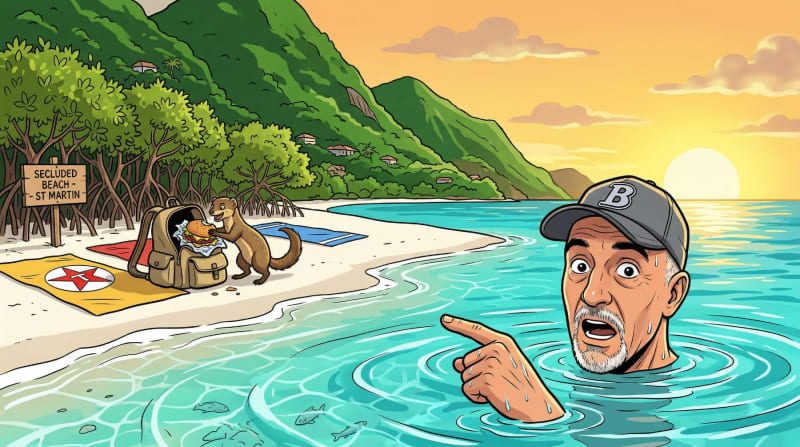
There are shady spots tucked into the mangroves at the back of the beach — claim one, set down your bag, and do not leave it unattended. I'll explain why.
The Mongoose Incident
The Mongoose Incident
We had packed four sandwiches across two backpacks for the four of us. When we reached the beach we dropped our bags, I changed into my rash guard, and we waded in. For nearly an hour we swam, floated, and forgot about everything.
When we came back to our bags, the sandwiches were gone. My wife was convinced she'd lost her mind — certain she'd packed them, unable to explain their absence, quietly mortified. We debated. We searched. We found nothing.
Then, about ten minutes later, we heard rustling in the mangroves. We turned around to find a small, confident mongoose dragging the evidence — two large sub sandwiches — about 40 feet into the brush, where he had apparently been enjoying a very good afternoon. He finished, then came back out and lurked around our bags looking for more.
The Indian mongoose (Herpestes javanicus) was introduced to Caribbean islands in the 1800s to control snakes in sugarcane fields. They are bold, resourceful, and completely shameless. Ours had clearly done this before. Keep your bags zipped and your food out of sight. Consider yourselves warned — and possibly charmed.
How to Plan Your Visit

How to Plan Your Visit
Time of day: Early morning or late afternoon is ideal — the midday sun on the exposed sections of the trail is intense. That said, we've done it at midday twice and survived happily with proper preparation.
What to bring:
- Plenty of water — more than you think
- Sunscreen, applied before you start
- Hiking shoes or sneakers with real grip
- A rash guard if you plan to swim
- Lunch (in a zipped bag — see above)
- A hat and sunglasses for the open road sections
What not to expect: Amenities of any kind. No vendors, no facilities, no shade structures. This is a nature reserve. Pack it in, pack it out.
Getting there: Car or taxi to the trailhead parking above Anse Marcel. The AllTrails listing for "Anse Marcel – Petite Cayes" has the trail mapped if you want a digital guide in your pocket.
One More Thing Worth Knowing

One More Thing Worth Knowing
Past Petites Cayes, if you follow the coastline around the rocky point, there are additional coves to explore — rougher, wilder, not really swimming beaches, but spectacular for clambering around on the rocks with the sea crashing below and Anguilla laid out across the water. We spent a good chunk of our beach time out there. Worth every minute.
Why This Hike Matters

Why This Hike Matters
Not every worthwhile place announces itself. Petites Cayes asks something of you — a bit of effort, a bit of heat, a willingness to step over a chain and follow a spray-painted arrow into the jungle on the say-so of fellow travelers who came before you. That's not an obstacle. That's an invitation.
The people who find this beach are the people who were looking for it. That already tells you something about the kind of afternoon you're going to have.
Content ID: W3s3DWHUWP3gPWhE2RQ73xCl
See an error? Tell us.

1 Comment
Renee
This is just a great hike. If you hit it on a week day, you have a greater chance of being all alone. Even if there are people, it is like to be 1 or 2 other couples - and there is plenty of space to spread out. There are even a few private little nooks with some shade among the mangrove trees on the far end. So amazing!
Mar 31, 2026 at 9:21 am
Share with the Community