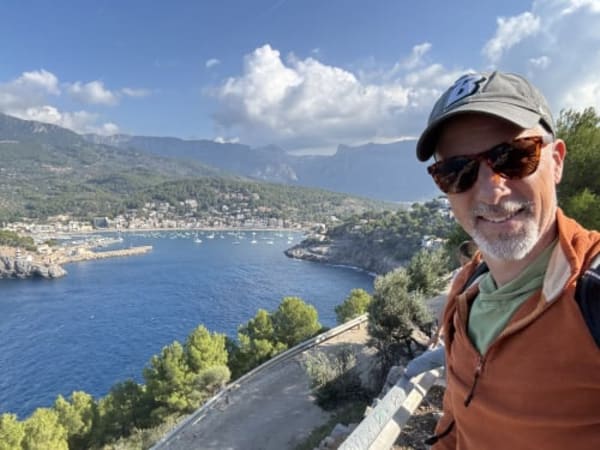

Naxos Chora: Arriving, Hiking, Eating, and the Portara at Sunset
The Short Version
- Naxos is the largest island in the Cyclades — 429 km², bigger than Santorini and Mykonos combined — and you need a car to see it properly.
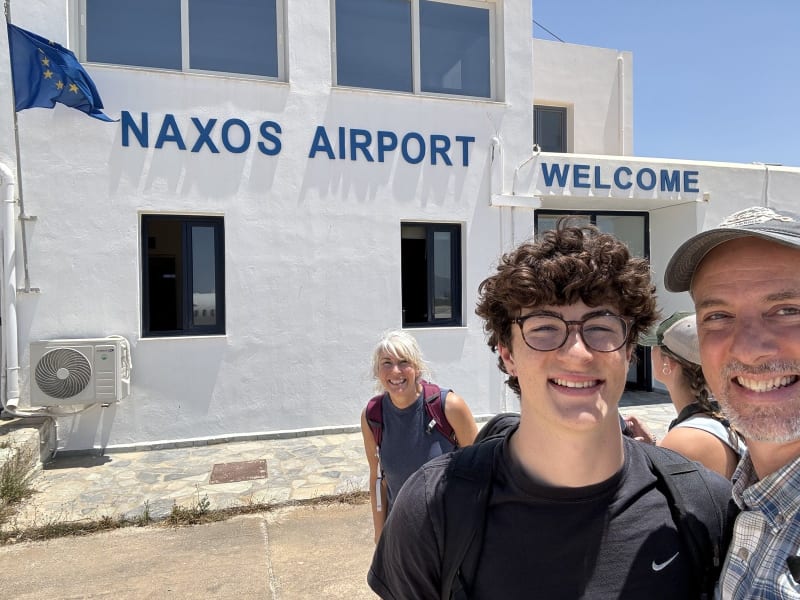
- The only flights in are from Athens on small 48-seat turboprops; air arrivals grew 29% in 2024, so book early or the seats are gone.
- The coastal trail north from Chora's Grotta area is unmarked, uncrowded, and ends at a hidden cove with black rocks and turquoise water that most visitors never find.
- Naxos is the most fertile island in the Cyclades — the graviera cheese, local potatoes, and Kitron liqueur are worth seeking out specifically, not just as sides.
- The Portara — a 2,500-year-old unfinished temple doorway at the harbor's edge — draws half the island every evening at sunset, and every single person there is right to come.
Naxos Town (Chora): The Island's Beating Heart
Naxos Town (Chora): The Island's Beating Heart
The approach to Naxos Town — known as Chora, the Greek word simply meaning "town" — is one of the great first impressions in the Aegean. White buildings stack up a hillside that rises from the harbor, crowned by a medieval Venetian castle called the Kastro. At the water's edge, on a small rocky islet connected to the port by a causeway, the Portara stands alone against the sky: a massive marble doorframe, all that remains of an unfinished temple to Apollo begun in the 6th century BC. It is the first thing you see arriving by sea. It is the last thing you see leaving. Everything in between is worth it.
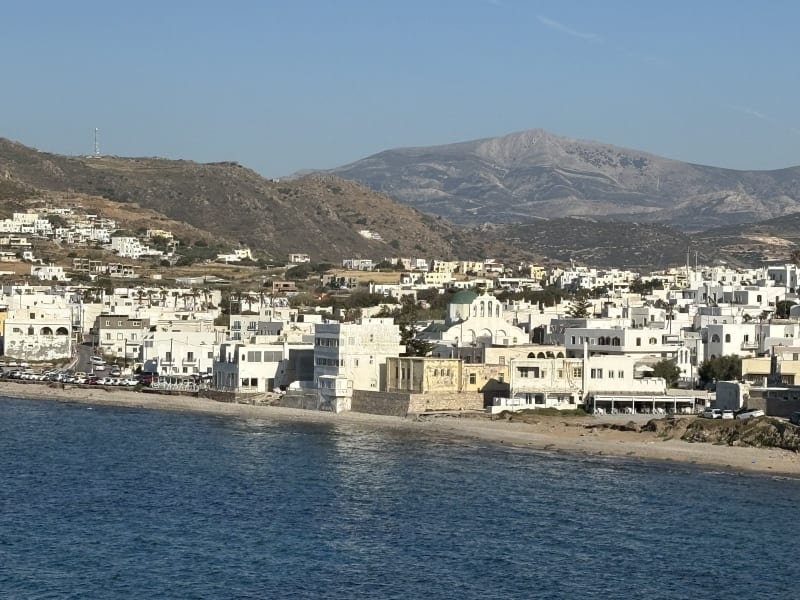
Chora is a real town — home to nearly 9,000 people year-round — not a stage set for tourists. The port waterfront is lively and lined with restaurants and cafes, but walk two minutes into the Bourgos neighborhood and the lanes narrow, the cats multiply, and the architecture shifts to something older and quieter. The Kastro sits at the top, its medieval walls partly forming the exterior of the houses built around them. Some of those houses still have family crests carved above the doorways. People actually live there. That combination — functioning port town, medieval maze, ancient ruins at the water's edge — is what sets Naxos apart from more curated Cycladic destinations. Santorini is a photograph. Naxos is a place.
According to the Municipality of Naxos, the island welcomed over 600,000 visitors in 2024 — a new record — with air arrivals alone growing 29% year over year. That growth is starting to show on the streets. But for now, Naxos still moves at its own pace.
Naxos is also the largest island in the Cyclades by a significant margin — bigger than Santorini, Mykonos, and Paros combined. That size matters practically: you need a car. Pick one up at the airport. You will use it every day.
The Hike North: Clifftops, Blue Water, and a Cove Nobody Else Found
The Hike North: Clifftops, Blue Water, and a Cove Nobody Else Found
Day one, we didn't go to a beach chair. We went north.
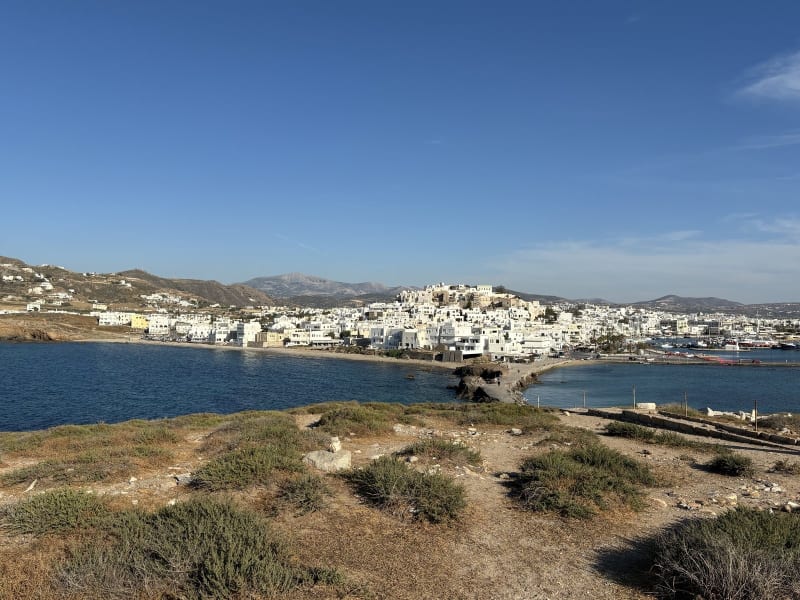
The trail starts at the northern edge of Chora, just past the Grotta area where the ancient Mycenaean city once stood — some of its foundations are still visible, partially submerged in the shallows. Follow the coastline past the last of the whitewashed houses and the path opens onto a clifftop track that the map makes look modest and the legs quickly correct. The Portara falls away behind you. The sea opens up on the left. Ahead, the headland pushes out into the Aegean with nothing beyond it but water and light.
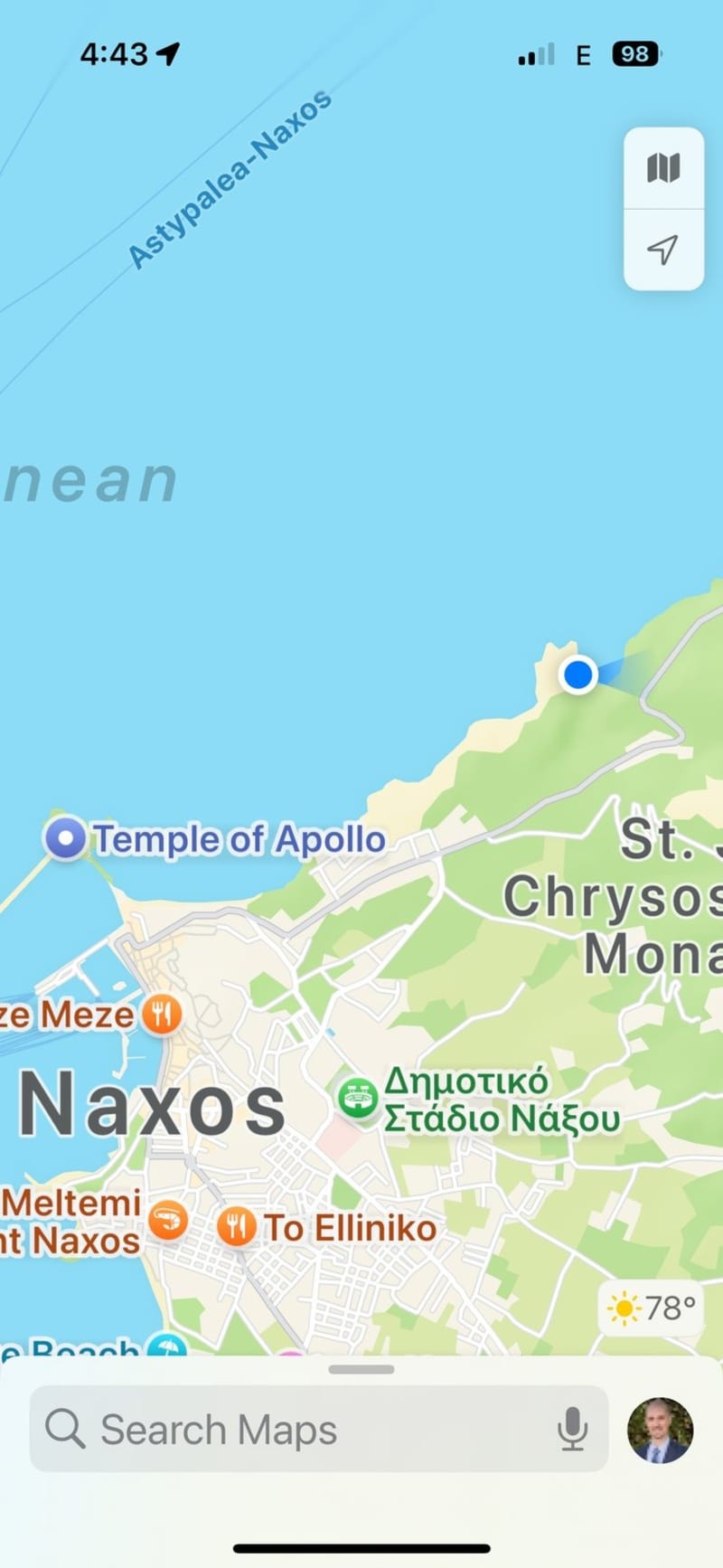
The trail is not marked, exactly. It's defined more by intention than infrastructure — a dirt path through scrub and rock that has been walked enough times to stay visible. Wear shoes with grip. Bring water. The meltemi wind that defines Naxos summers was working against us, which made the heat manageable and the views dramatic: waves breaking against black rocks a hundred feet below, the Aegean an impossible shade of blue-green, and the whole whitewashed mass of Chora visible behind us across the bay.


The reward at the end is a small cove tucked below the headland — black volcanic rocks, gray sand, turquoise water, and on the afternoon we were there, nobody else. No umbrellas. No beach bar. No music. Just the sound of the Aegean doing what it does and the specific kind of quiet that only exists when you've earned a place by walking to it.

What does it take to find a place on a Greek island that nobody else has claimed for the afternoon? Less than you think — just the willingness to walk past the last signpost.
Eating in Town: Naxos Takes Its Food Seriously

Eating in Town: Naxos Takes Its Food Seriously
One thing that separates Naxos from its neighbors is that it actually grows things. Naxos is the most fertile island in the Cyclades — its mountain interior produces potatoes, citrus, olive oil, and a range of cheeses including the famous graviera, a hard aged cheese that shows up everywhere and earns it. The local kitchens know what they have. The food reflects it.
The port waterfront facing the ferry terminal is lined with tavernas that range from tourist-facing to genuinely excellent, often in buildings that look identical from the outside. We ended up in one of those rooms with dolphin murals on the walls and fishing nets on the ceiling — the kind of place that looks like a cliché and then delivers octopus and calamari that make you quiet in the way only very good food can. Naxian wine is underrated. The local Kitron liqueur, distilled from citron leaves unique to Naxos, is worth trying at least once.

After dinner, the town doesn't stop — it shifts. The waterfront fills with families and couples doing the evening volta, the Greek tradition of the slow evening walk that is less an activity than a philosophy. The kids ran ahead. We walked behind. The Portara was lit against a darkening sky at the end of the causeway.
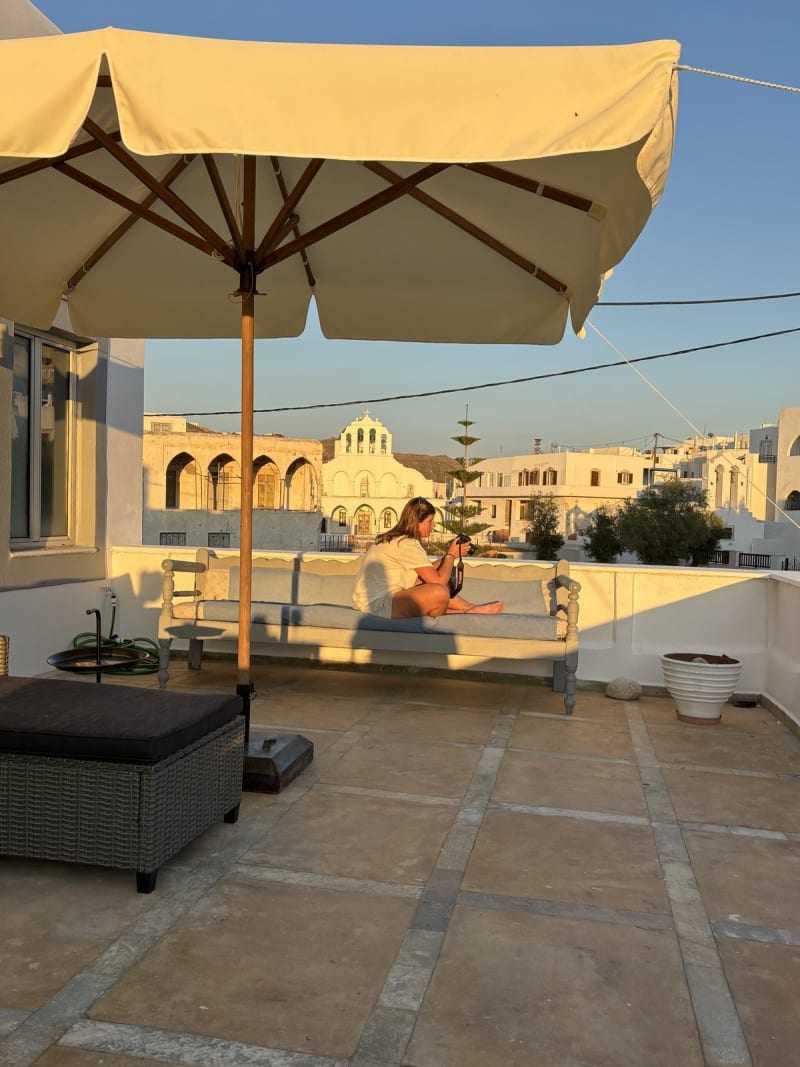
It was the kind of evening that makes a place feel like it belongs to you, even though you've only been there a few hours. What would it mean to move through every place with this kind of unhurried attention?
The Portara at Sunset: Everyone Shows Up, and They're Right To

The Portara at Sunset: Everyone Shows Up, and They're Right To
Walk out along the causeway to Palatia islet any evening and you will find yourself among a crowd that has independently reached the same conclusion: this is the right place to be right now. Locals, tourists, families, couples — all of them standing on a rocky peninsula watching the sun drop into the Aegean through a 2,500-year-old marble doorframe.
The Portara was begun around 530 BC as a temple to Apollo, built entirely from Naxian marble. According to Greek mythology, this is also where Dionysus found Ariadne after Theseus abandoned her on the island — which means humans have been finding reasons to stand on this particular piece of rock and feel something for a very long time. Construction stopped when the island's tyrant Lygdamis was overthrown, and what remains is the monumental doorway, standing six meters tall, framing nothing and everything depending on where the light is. In the late afternoon it frames the town behind you. At sunset it frames the sun itself.

We stood there with the crowd as the light went orange, then red, then the specific deep amber that only happens over open water. The silhouettes of strangers lined the hill. Nobody was talking much. That's the gift the Portara gives — it makes a community out of whoever happens to show up. You don't have to know anyone. The doorframe does the work.

"I didn't expect to feel anything standing in front of a broken doorway. Then the sun went through it."
What does it mean that a structure someone abandoned 2,500 years ago still draws a crowd every single evening? What are we all showing up for?
Content ID: oF6rIJ8vwkiVrLtDRoNpTQiQ
See an error? Tell us.



Comments
Share with the Community