

The EU's New Border System Is Live — What American Travelers Need to Know Before This Summer
The Short Version
- The EU Entry/Exit System went fully live on April 10, 2026 — replacing passport stamps with biometric registration (fingerprints and facial scan) for all non-EU travelers entering Schengen countries.
- Launch day was chaotic: wait times of 2–4 hours at major airports including Paris CDG, Barcelona, and Rome, with documented cases of flights departing without dozens of booked passengers.
- First-time registration is the hard part — budget 90 minutes minimum from landing to cleared immigration on your first 2026 Schengen entry; subsequent entries should be faster once biometric data is on file.
- The Frontex pre-registration app exists but uptake has been low; check whether your specific entry airport supports pre-enrollment before you travel.
- ETIAS — the EU's pre-travel authorization system for visa-free travelers — is expected to launch later in 2026, adding another step to Europe trip planning before the year is out.
Ten Years of Waiting
Ten Years of Waiting
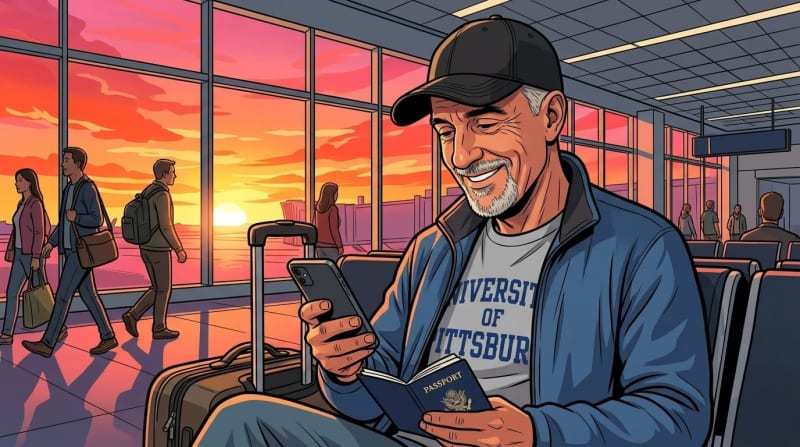
I've been following the EU Entry/Exit System since roughly 2016. Every year, there was a new launch date. Every year, something pushed it. The 2024 Paris Olympics. Technical readiness. Political coordination across 29 countries. I read every update, tracked every delay, and every time we booked a Europe trip I wondered: is this the year?
In 2025 we went three times — Florence for a week in the spring, two weeks in Greece with family over the summer, and then Barcelona and Mallorca in the fall. By the time we hit Barcelona, the machines were physically there. On the way in, you could see the kiosks and camera setups in the immigration hall — technicians in vests testing the equipment nearby — but the EES was not being used for passengers yet. We waited nearly an hour in the traditional immigration queue while the machines sat idle about twenty feet away. Coming in, it was all manual. Still stamped.
On the way out was different. The machines were running. Real passengers going through, biometric scans actually happening. There was a separate EES queue and we got in it — we had been wanting to get our first registration done at a quiet moment rather than a packed summer terminal. The person right in front of us was the cutoff. They would not let us in. One person away from getting it done.
That was October 2025. Six months later, on April 10, 2026, the system went fully live across all 29 Schengen countries simultaneously.
We have two Europe trips this year. Rome in May for a family graduation trip. Paris in September with Renee. The EES is no longer a story I'm following. It's something we're walking into.
What the EES Actually Does

What the EES Actually Does
The Entry/Exit System replaces the passport stamp. Instead of a manual stamp, the EES electronically records data about travelers entering and exiting the Schengen Area — including digital records of entries, exits, and refusals of entry, alongside biometric data: a facial image and fingerprints. It applies to all non-EU travelers entering Schengen countries for short stays of up to 90 days within any 180-day period. Americans, Canadians, British travelers, Australians — anyone from a country that previously got a stamp.
The 90-day rule has not changed. What has changed is how it is tracked and enforced. The EES creates a searchable database that border authorities across all 29 participating countries can access, making it far easier to identify overstays and flag security concerns.
According to the European Commission, since the phased rollout began in October 2025, 45 million border crossings have been recorded, over 24,000 people have been refused entry, and the system has identified over 600 people who posed a security risk. Those numbers suggest the system is doing what it was designed to do. The question is whether it can do it without grinding airports to a halt.
Your first crossing after April 10 requires full registration: fingerprints and a facial scan. Once you are in the system, subsequent entries should be faster — the biometric data is already on file and the border officer is verifying rather than registering. The pain is front-loaded.
What Happened on Launch Day

What Happened on Launch Day
The EES rollout was phased over six months — starting at 10% of ports on October 12, 2025, expanding to 35% by January 2026, reaching 50% by March, and moving to 100% coverage at 00:01 CET on April 10, 2026. Problems surfaced throughout that staged launch. Portugal suspended the system fully at Lisbon in December 2025. Gran Canaria experienced crashes. Some locations reported processing time increases of 70%.
Full launch day was worse. According to ACI Europe and Airlines for Europe, travelers faced wait times of two to three hours at major hubs including Paris Charles de Gaulle, Berlin Brandenburg, Barcelona El Prat, and Athens. In one documented case reported by International Airport Review, a flight to the UK departed without 51 booked passengers. On another service, no passengers had reached the gate by closing time, with only 12 arriving 90 minutes later.
Airport disruptions stemmed from several overlapping issues: chronic understaffing at border control points, persistent technology and automation failures, and poor adoption of the Frontex pre-registration app across Schengen states. The European Commission defended the system, stating that registration takes an average of 70 seconds at full capacity. Airports and airlines argued this assessment did not reflect operational realities at high-volume terminals where flows are uneven and staffing levels vary.
ACI Europe, Airlines for Europe, and IATA have jointly called on the European Commission to allow member states to fully suspend EES operations when queues become excessive — particularly through the summer peak. The EU has allowed countries to partially suspend operations during a 90-day window after launch, with a possible 60-day extension. That means some airports may be suspending biometric collection on your arrival day and some will not be. You have no way to know in advance.
Ten years of delays prepared me for the system being slow to arrive. Nothing prepared me for it arriving and immediately causing passengers to miss their flights home.
What This Means for Our May Trip
What This Means for Our May Trip
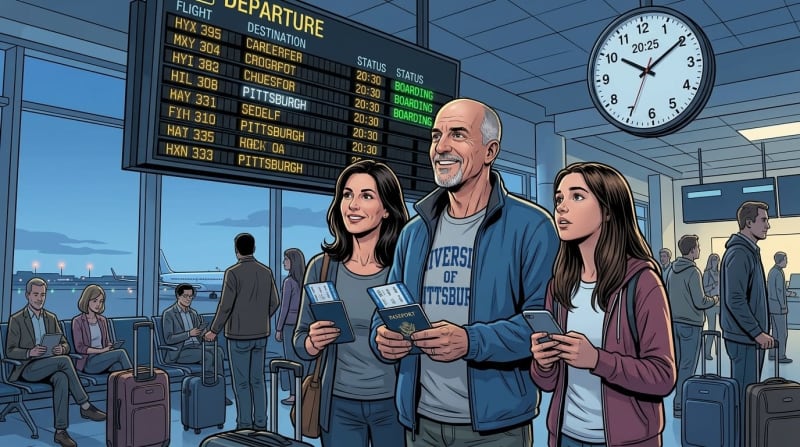
We fly into Rome in May for my daughter's college graduation trip — sixteen days starting in Italy, moving through Cinque Terre and the Riviera, ending in Nice. We drive to Toronto and fly direct, which simplifies the inbound side — our car waits, no connection to thread. But Nice is our exit point, and that adds a variable. Nice Cote d'Azur airport is a busy international hub and was among the airports feeling EES pressure on launch day. We will need to get to the airport with real breathing room on departure day — EES exit processing adds time on the way out, and we cannot afford to be casual about it with an international flight home to Toronto.
The entry into Rome is its own calculation. Italy was one of the countries experiencing the worst delays on April 10. Our arrival will be our first EES registration — fingerprints, facial scan, the full process for everyone in the family. Budget at minimum 90 minutes from landing to clearing immigration. The first night is in Rome, and we are planning to get to the airport with plenty of time — no reason to let a slow border queue set a stressful tone for a graduation trip.
I am also checking the Frontex pre-registration app before we leave. Uptake has been low and it is unclear how much it will help at Fiumicino specifically, but if it is available it is worth doing.
What This Means for September
What This Means for September
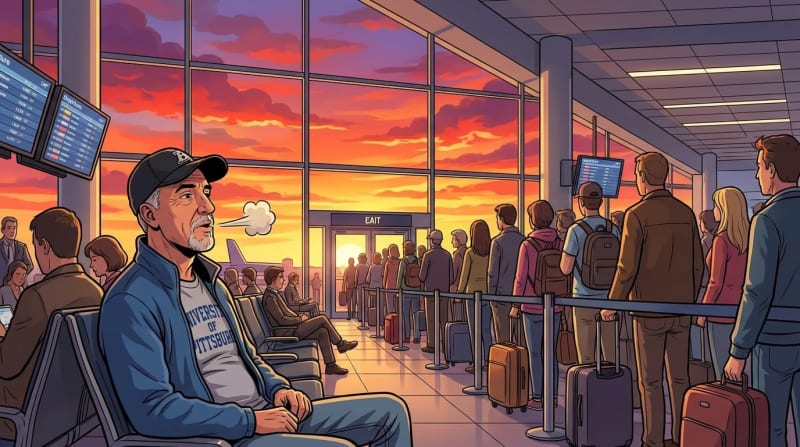
Renee and I fly back in September — a week hiking in the Lyon and eastern France area, then a week in Paris visiting friends on sabbatical. We exit from Paris, which is actually the more straightforward situation. By September, the EES will have been operating for roughly five months.
There is reason for cautious optimism. Most frequent US travelers will already be in the system from summer trips — verification rather than first registration. That should reduce the volume of full registrations at any given border point. Charles de Gaulle had serious problems on April 10, but it is also one of the airports investing most heavily in additional kiosks and staffing. France's Parafe e-gates — which rely on facial recognition — were not yet compatible with US passports as of early 2026, but compatibility was expected by late spring. By September, that should be resolved.
My read: September in France will be meaningfully better than May in Italy. But I am still building buffer into our Paris departure, and nothing tight on the last day.
How to Actually Prepare

How to Actually Prepare
A few practical steps worth taking before any Europe trip this summer or fall.
Check the Frontex pre-registration app. Not all airports support it yet, but if yours does, registering biometrics before you arrive removes the most time-consuming step from the border queue. Search EES pre-enrollment for your specific entry airport before you travel.
Budget 90 minutes minimum from landing to cleared immigration on your first Schengen entry of 2026. At busy airports during peak summer, budget two hours. Do not book onward travel that depends on a tight arrival window.
Know your airport's current status. Some countries — Portugal most notably — have been suspending EES at specific airports when queues become excessive. Check ACI Europe and your departure airport's website in the week before travel. The situation is fluid and changes airport by airport.
First-time registration is the hard part. Once you are in the system, subsequent entries are faster. If you are traveling to Europe multiple times in 2026, the first trip will be the slowest border crossing. Plan accordingly.
Watch for ETIAS. The EU's pre-travel authorization system — think ESTA but for Europe — is expected to launch later in 2026. Unlike the EES, which happens at the border, ETIAS will require online pre-approval before you even book your flight. It is not live yet, but it is coming. Sign up for updates at etias.eu so you are not caught off guard when it does.
We have been planning Europe trips long enough to absorb one more new layer. The EES is real, it is live, and the first summer under it will be bumpy. But the travelers who know what is coming will move through it faster than the ones who show up at the airport expecting the world they left behind.
What is the one change you are making to your Europe plans this year because of the EES?
Content ID: sycbi914RzIjnQIpNcRfrtLe
See an error? Tell us.



Comments
Share with the Community