Eastern Europe Is Having Its Moment — Here's Why Travelers Are Finally Paying Attention
The Short Version
- Prague leads all trending destinations globally with a 180% year-over-year surge in flight searches, according to KAYAK's 2026 Travel Trends Forecast — and six other Eastern European cities fill out the rest of the top ten.
- Round-trip flights to Prague are averaging around $695 from the US in 2026, roughly 19% cheaper than the year before, making this one of the better-value long-haul options available to American travelers right now.
- Split, Croatia contains a genuinely lived-in Roman emperor's retirement palace from the third century — people have apartments inside the ancient walls and restaurants operate in the old cellars.
- Albania stands out as the destination still closest to actual discovery, with an Adriatic-quality coastline, average round-trip fares around $679, and almost no American tourist infrastructure yet.
- Slovenia does something rare: Ljubljana, Lake Bled, and serious alpine hiking in Triglav National Park are all within an hour of each other, which means a single base covers city, lake, and mountain in one trip.
Why Eastern Europe, Why Now

Why Eastern Europe, Why Now
Something is happening in the flight search data that travel writers tend to notice before everyone else does. According to KAYAK's 2026 Travel Trends Forecast, based on millions of flight searches, Prague leads all trending destinations globally with a 180% increase in interest year-over-year. Sofia, Bulgaria is up 136%. Tirana, Albania is up 66%. Seven of the top ten trending destinations worldwide are in Eastern Europe.
These are not new discoveries. Prague has been extraordinary for centuries. What changed is who is paying attention — and why.
Several factors are driving the surge together: affordability, the cultural appeal of cities that blend rich history with vibrant food and art scenes, and improved flight connectivity that has made once-distant capitals genuinely accessible from the United States. Add to that a growing fatigue with the overcrowded Western European circuit — Paris in August, Rome in July, Amsterdam at any point — and the calculus shifts quickly.
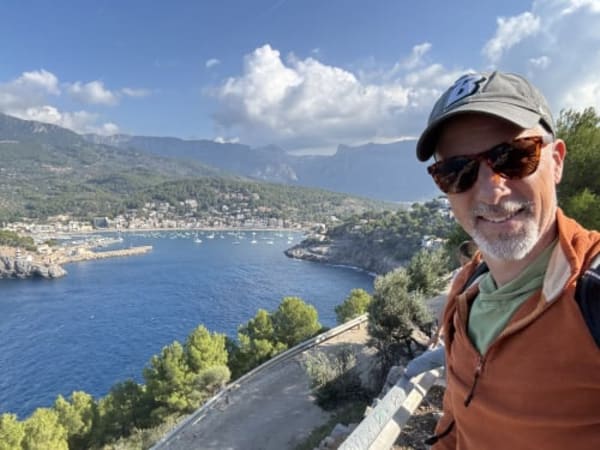
I first visited Czechoslovakia decades ago, before the Velvet Revolution had fully settled into the new democratic order. The country was still finding itself. Prague was breathtaking and slightly raw. Since then I have watched this entire region transform, traveling back through Slovenia with my family in 2024 and through Croatia with my wife Renee and friends in 2025. What I found was a part of Europe that has matured into itself — confident, increasingly well-traveled, and still meaningfully different from the western half of the continent. Here is what I know from experience and what the data confirms about where to go.
Czech Republic: The Capital That Earns Every Superlative

Czech Republic: The Capital That Earns Every Superlative
Prague is one of those cities that sounds overhyped until you arrive and realize it is not.
Prague is the only Central European capital to escape large-scale bombing during the last century's wars, which means it stands today as one of Europe's best-preserved cities — full of Art Nouveau facades, Gothic towers, and Baroque churches that elsewhere were lost to conflict or redevelopment. Walking across Charles Bridge at dawn, before the tour groups arrive, is an experience that justifies the flight on its own.
I was here when it was still Czechoslovakia. The city then had a particular quality — something guarded and watchful underneath the beauty, a place emerging from decades of constraint. That quality is gone now. What remains is a city that has absorbed its freedom and wears it naturally, with a food scene that has caught up to the architecture and a beer culture that was always world-class.
Beyond the Charles Bridge and Prague Castle circuit, the neighborhoods of Vinohrady and Žižkov offer a working Prague that most visitors miss — residential streets, local markets, cafes where nobody is trying to sell you a Kafka souvenir. The Vysehrad fortress, perched on a cliff above the Vltava River south of Old Town, gives you panoramic views of the city without the crowds that pack the castle hill across the water.
Flights to Prague are averaging around $695 round-trip from the US in 2026 — down roughly 19% from the previous year — making this one of the better-value long-haul flights available to American travelers this summer (Travel and Tour World, 2026).
Slovenia: The One That Surprises Everyone

Slovenia: The One That Surprises Everyone
Slovenia is the country that people come back from and immediately tell everyone they know about. It happened to us.
In 2024, Renee and I took our kids to Slovenia — a trip structured around two distinct experiences: the capital Ljubljana as our urban base, and Lake Bled as our nature base for a week of day trips into the Julian Alps.
Ljubljana is the right size for a city. Small enough to walk completely in a morning, deep enough to spend three days without running out of things to discover. The old town sits along the Ljubljanica River, castle above it on the hill, outdoor cafe culture on every bank. It has the charm of a Central European capital with none of the crowds — partly because most travelers fly past it to get somewhere else, which means those of us who stop are in good company with a lot of local regulars.
Lake Bled is the photograph you have seen. The island church in the middle of the lake, the castle on the cliff, the Alps behind everything. In person it is better than the photograph — which is not always true of famous places. We based ourselves at the lake and spent the week on day hikes into Triglav National Park, Slovenia's only national park and one of the most beautiful mountain landscapes in Europe. The hiking here requires good legs and proper footwear but no technical equipment — these are serious mountain trails, not scrambles. The rewards are proportional.
What Slovenia does better than almost anywhere I have traveled is the combination of city and nature at close range. Ljubljana to the lake is under an hour. The lake to the Triglav trailheads is another twenty minutes. You can have a cappuccino in a riverside cafe in the morning and be above the treeline by early afternoon.
Croatia: Stone Cities and the Adriatic
Croatia: Stone Cities and the Adriatic
Croatia was already on the European radar before we went with friends in 2025, but knowing a place is famous and experiencing it are different things. The Dalmatian coast earns everything said about it.
We moved through four cities: Zagreb inland, then Split, then the island of Korčula, then Dubrovnik at the southern end.
Zagreb surprised me most. It is not a city that comes up in conversations about Croatia, which tend to skip straight to the coast — but it should. The upper town, Gornji Grad, is a medieval quarter of cobblestone streets and churches perched above the modern city. The Museum of Broken Relationships, which collects objects from ended relationships donated by people worldwide, is one of the stranger and more moving museums I have encountered anywhere. The cafe culture is serious and unhurried. Zagreb feels like a city that belongs to its residents rather than its visitors, which is increasingly rare on this coast.
Split is built around the Diocletian's Palace — a Roman emperor's retirement complex from the third century that over the following seventeen centuries became a living city. People live inside the palace walls now, in apartments built into and around the ancient stone. Restaurants and bars fill the cellars where Roman guards once stood. It is the most seamless layering of history and daily life I have seen in Europe.
Korčula is an island that moves at a different pace from the mainland — quieter, smaller, with an old town that sits on a small peninsula jutting into the Adriatic. It is the kind of place where you find a restaurant, eat there every day, and feel slightly bereaved when you have to leave.
Dubrovnik closes the arc. The old city, encircled entirely by medieval walls you can walk in full, is extraordinary — and genuinely crowded. Go early morning or evening. The cruise ship hours are the hours to avoid. Outside those windows, the city reveals itself properly.
Flights to Dubrovnik are averaging around $911 round-trip in 2026 — still down 24% from the previous year (India Outbound, 2025). For a coast this remarkable, that is not an unreasonable entry price.
Where to Go Next: Bulgaria, Albania, and Beyond

Where to Go Next: Bulgaria, Albania, and Beyond
The search data points to destinations that most American travelers have not yet visited. That gap is closing, which is exactly why now is the time.
Bulgaria is seeing flight searches up 136% year-over-year. Sofia, the capital, sits at the base of Vitosha Mountain — a national park that begins at the edge of the city and offers hiking within minutes of the center. The Alexander Nevsky Cathedral is one of the great Orthodox churches in Europe. The food and wine are underknown and excellent. The country has a coast along the Black Sea that draws European vacationers but almost no Americans yet.
Albania is up 66% in search interest, with round-trip fares from the US averaging around $679. Tirana has a Mediterranean climate, vibrant street art culture, and mountains within easy reach. The Albanian Riviera, running south along the Ionian Sea, offers beaches that rival anything on the Adriatic at a fraction of the cost. The country is genuinely off the beaten path in a way that the rest of this list no longer is — which means the experience is closer to discovery than tourism.
The pattern across all of these destinations is the same one that drew travelers to Prague before everyone else arrived, to Ljubljana before it appeared in travel magazines, to Croatia before the summer crowds made Dubrovnik famous. these are places that have always deserved the attention. The data suggests it is finally arriving.
Content ID: s7Ljf7FMA7TuUDSh9vADQB9r
See an error? Tell us.


Comments
Share with the Community