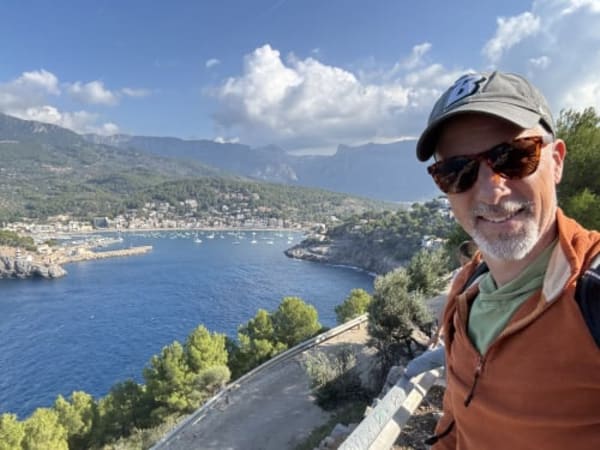

Things to Do in Naxos: Wingfoiling, the Kastro, and a Sunset at the Portara
The Short Version
- Agios Georgios beach sits just 2km from Naxos Town and manages to serve wing foilers and families swimming side by side on the same stretch of sand
- The Meltemi wind runs at 15+ knots most summer afternoons — a reef-sheltered lagoon keeps the inside flat while the outside opens to open Aegean swell
- The Kastro, the 13th-century Venetian quarter above the town, was noticeably quieter than the commercial lane below — most visitors don't make it that far uphill
- The Portara — a 2,500-year-old unfinished temple gateway — draws the whole island at sunset, and it earns every person who shows up
- Renting a car on Day 3 changed the trip — Naxos is the largest of the Cyclades and rewards the traveler who can move freely across it
Renting a Car and Getting Your Bearings

Renting a Car and Getting Your Bearings
The ferry drops you in Naxos Town and it's tempting to think you can walk everywhere. For the old town, you can. For the rest of the island — and the island is big, bigger than most first-timers expect — you need a car. We sorted that on Day 3, picking up a rental from Auto Tour on the waterfront within a few minutes of arriving at the port. If you've already read about our first two days in Naxos Chora and the hike up Mount Zeus, you know the rhythm by then: mornings for movement, afternoons for wherever the day takes you.
Day 3 belonged to the beach — and then, inevitably, to the Kastro.
Agios Georgios: One Beach, Two Very Different Days

Agios Georgios: One Beach, Two Very Different Days
Agios Georgios is Naxos Town's home beach, just 2 kilometers south of the port and a short drive from anywhere in the Chora. You could walk it in twenty minutes. Most people drive. Either way, you arrive at a wide, sandy bay with a reef running offshore that creates a shallow, flat-water lagoon on the inside — sheltered conditions that make it genuinely useful for a range of skill levels and activities simultaneously.
That's exactly how our family used it. My wife and daughter went straight to the water's edge — body surfing, swimming, lying in the sun with Paros visible across the strait. Meanwhile my son and I were at the southern end rigging wings. The beach is big enough that both things can happen on the same stretch of sand without either group having to compromise.
The wind at Agios Georgios is the Meltemi — the dominant thermal system of the Cyclades that blows nearly every day during summer at approximately 15+ knots. It builds through the morning and runs strong through the afternoon. A long reef separates the standing-depth lagoon from the open sea, creating flat water on the inside and rolling Aegean swell on the outside. We went through both.

I wrote a full breakdown of the wing foil session — the rental experience, the gear, the conditions, what it feels like to ride downwind rollers in the Aegean — over on WingFoil Fit. What I'll say here is that Agios Georgios does something rare: it puts world-class wind-sport conditions right next to a family-friendly swimming beach, two kilometers from a medieval port town. You don't have to choose between an adventure day and a beach day. You just go to Agios Georgios and let your family sort itself out by interest.

What does it mean when a beach that good is also just the town beach — the one that's been sitting there for everyone the whole time?
Naxos Town at Dusk: The Square and the Lane

Naxos Town at Dusk: The Square and the Lane
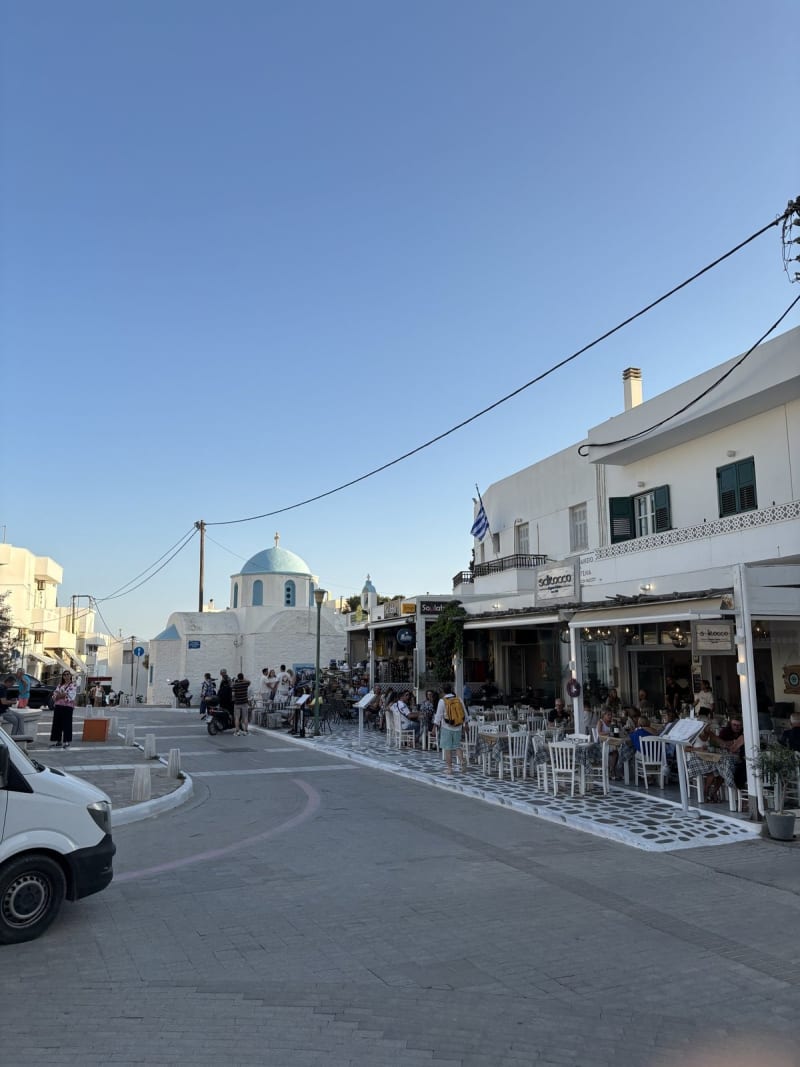
By late afternoon we were back in the Chora, converging from the beach. The main square opens up just inside the port — whitewashed buildings, a blue-domed church at one end, cafe tables running along the pavement, the Greek flag catching whatever breeze is still moving. It is exactly what you want a Greek island square to look like, and it delivers without effort.
From there the pedestrian lane winds uphill through shops, bougainvillea, restaurants with menus posted outside. A sign for the Flamingo Restaurant Bar promised live Greek music. The cobblestones are the irregular grey-and-white mosaic pattern you see throughout the Cyclades — worn smooth in the middle where the foot traffic runs. It's not a shopping street performing for tourists. It's a shopping street that happens to be full of tourists because it's genuinely the right place to be at that hour.
We found a garden restaurant down a side alley — spotted it first through a gap in an ancient stone wall, tables under plane trees, the sound of conversation. We ate there. Best decision of the afternoon.

The Kastro and the Old Town

The Kastro and the Old Town
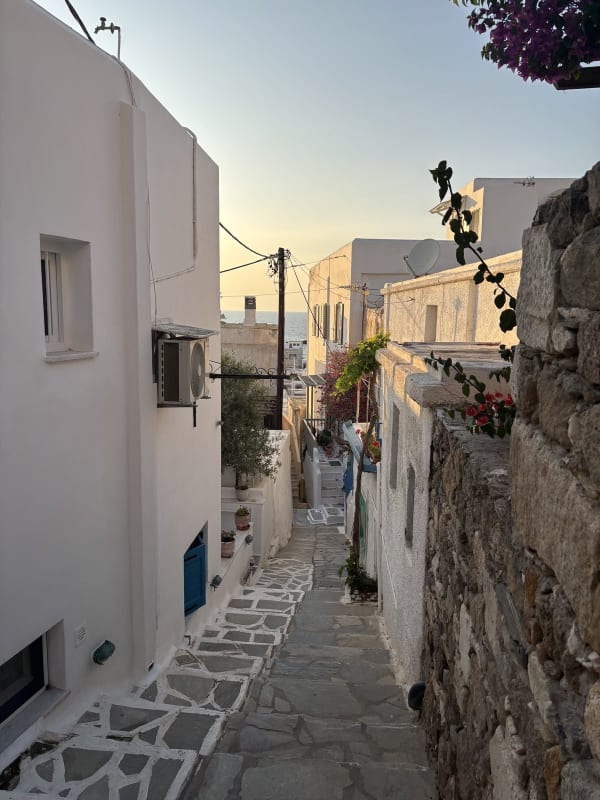
Above the commercial lane, the Kastro begins — the Venetian fortified quarter that has stood on this hill since the 13th century. The streets narrow, the stone changes from whitewashed plaster to raw Cycladic granite, and the architecture shifts from tourist-facing to simply old.

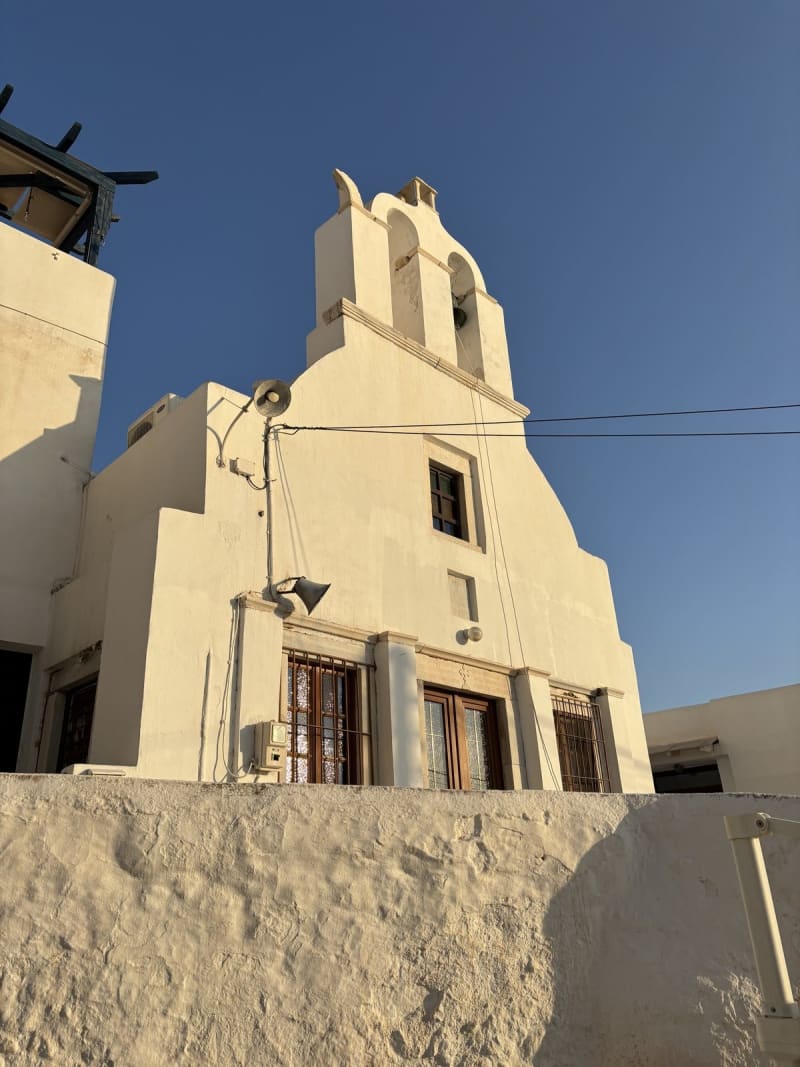
The alleyways descend in stone steps toward the sea, lined with potted plants, blue doors, the occasional cat. Bougainvillea spills over walls. There are churches at every turning — small domed chapels, ornate bell towers, the Byzantine apse of what turned out to be a gallery space with the Petalouda Art Gallery sign propped at the door. Naxos doesn't separate its history from its present life. The old town is still lived in. The studios still have satellite dishes on the rooflines.

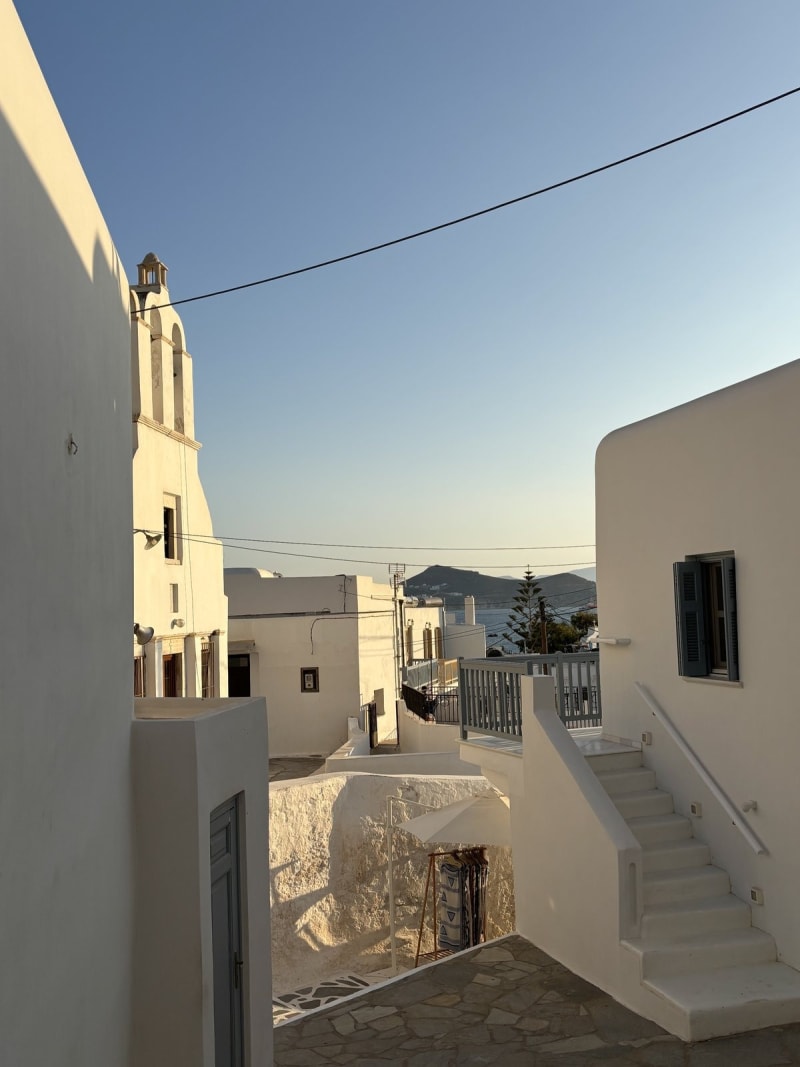
The Venetian tower that anchors the upper quarter glows amber in the late light. Seven hundred years of standing and it still looks like it means it.

"The Kastro doesn't announce itself. You just keep walking uphill and at some point you realize you've arrived somewhere completely different."
What surprised me most was how few people were up here. The lane below was full. The Kastro itself was quiet.
The Portara at Sunset
Everyone goes. That's not a criticism — it's just the truth. the Portara is a single marble gateway, the remains of a Temple of Apollo begun in the 6th century BC and never finished, standing on a rocky promontory connected to the port by a causeway. At sunset, the entire island appears to walk out there.
We joined them. By the time the sun touched the horizon, there were people standing shoulder to shoulder along the ridgeline, silhouetted against orange sky. It was the kind of scene that makes you understand why places become iconic — not because someone decided they should be, but because the thing itself is genuinely that good. A 2,500-year-old doorframe framing the Aegean at dusk, with half a Greek island standing in front of it.
I'd seen it on the first evening too — that account is in the Naxos Chora piece. Coming back didn't diminish it. If anything, sharing it with the whole family on a day that had already included wing foiling, body surfing, a garden dinner, and the quiet of the Venetian quarter made it land differently. A day like that earns its sunset.
What's your day worth when it ends with a 2,500-year-old doorframe and everyone you came with?
Content ID: k34G62z1Ywt1JpXKJLUikhme
See an error? Tell us.



Comments
Share with the Community