Gaudí's Barcelona: What to Expect When You Visit the Four Essential Sites
The Short Version
- Seven of Gaudí's works in Barcelona hold UNESCO World Heritage status — a concentration tied to a single architect that exists nowhere else on the planet.
- Sagrada Família, still under construction after 144 years, reached its full height of 172.5 meters in February 2026 when the final piece of the Tower of Jesus Christ was installed, making it the tallest church in the world.
- Casa Batlló draws roughly one million visitors a year, and the after-dark visit — where LED lighting and illuminated stained glass make the mosaic facade pulse with color — is a genuinely different experience from the daytime tour.
- Park Güell caps entry at 1,400 visitors per hour, and weekday mornings before tour groups arrive make a measurable difference in how the site feels.
- Booking tickets before arrival isn't optional — Sagrada Família sells out weeks ahead in peak season, and walk-up availability at Casa Batlló is essentially nonexistent.
I'll be honest — I wasn't sure I was going to like any of it.
I'd seen the photos. The melting facades, the bone-shaped balconies, the mosaic everything. It all looked slightly unnerving from a distance — like someone had built a city out of fever dreams and broken tile. George Orwell, who spent time in Barcelona during the Spanish Civil War, called the Sagrada Família "one of the most hideous buildings in the world." I wasn't quite there, but I understood the instinct.
Then I showed up in person. And within about twenty minutes, I had completely changed my mind.
What looks unusual in photographs — the wavy lines, the organic curves, the refusal of anything straight — feels entirely natural when you're standing in front of it. The buildings don't feel weird. They feel inevitable. Like Gaudí looked at how water moves and stone weathers and living things grow, and just built that way instead. That shift — from skepticism to something close to awe — happened faster than I expected, and it happened at every single site.
Barcelona has several of his works within walking distance of each other. Seven of Gaudí's works in Barcelona are designated as UNESCO World Heritage Sites — a concentration of protected architecture you won't find anywhere else in the world for a single architect. We visited four of them. Here's what we found.
Casa Batlló: The Building That Changes at Night

Casa Batlló: The Building That Changes at Night
The first time we walked past Casa Batlló it was midday, and we stopped cold on the sidewalk. The building wasn't built by Gaudí from scratch — it was originally constructed in 1877 as a typical apartment building, and Gaudí transformed it between 1904 and 1906 for a wealthy textile magnate named Josep Batlló. What he left behind is covered in a shimmer of broken ceramic tile — blues and greens that shift depending on the light — with balconies shaped like skulls and bones and a roofline that curves like the back of a dragon. Locals know it as Casa dels Ossos — the House of Bones.
On the left as you face it, you can see Casa Amatller pressed right up against it, its stepped Gothic gable a completely different statement. The contrast is almost funny. Every other building on Passeig de Gràcia is playing by the rules. Casa Batlló isn't playing at all.
Inside, the Noble Floor — spread over more than 700 square meters, where the Batlló family once lived — moves through stained glass, carved ceilings, and a central light well tiled in gradient blues, darker at the top and lighter at the bottom to distribute natural light evenly through the building. Gaudí solved engineering problems the way nature does: quietly, invisibly, beautifully.
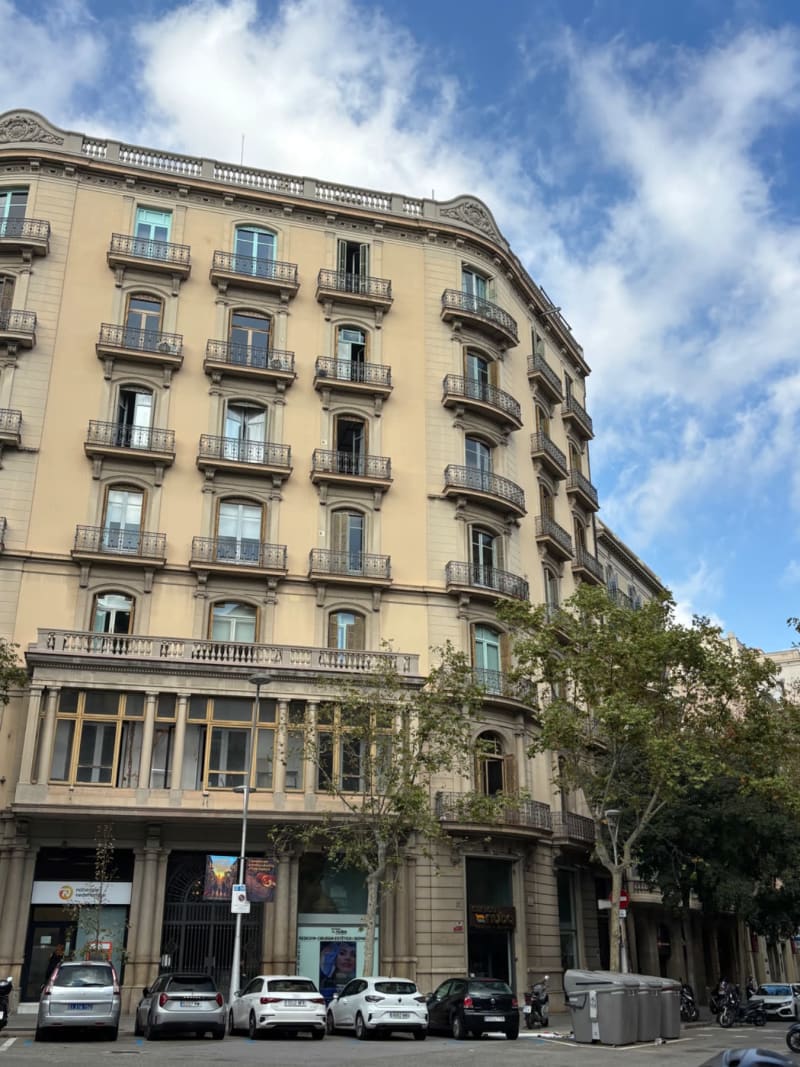
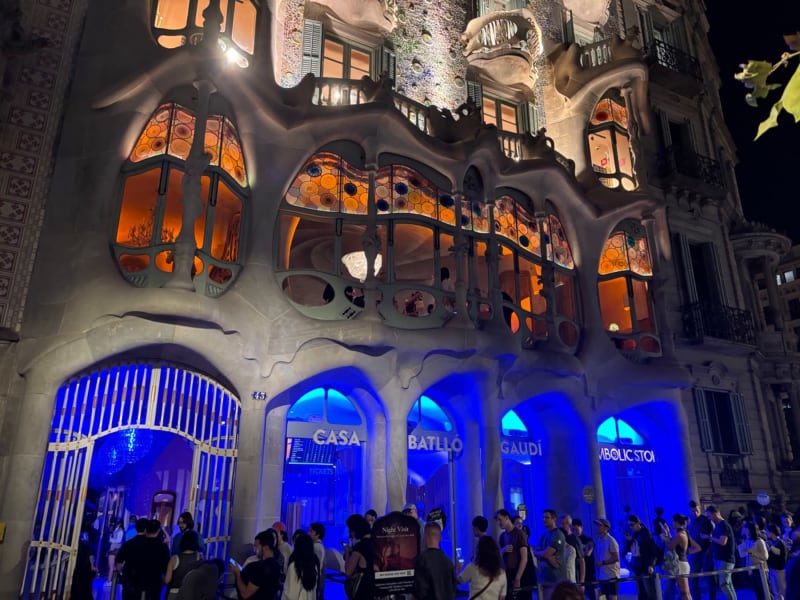
We came back that night for the after-dark experience, and it was worth the second trip. The ground floor glows electric blue from LED lighting, and the upper floors are lit from within, making the stained glass and mosaic work pulse with warm amber light. The crowds are real — there's a queue — but the experience of standing on that sidewalk watching the building come alive after dark is something you don't forget quickly. Casa Batlló welcomes approximately one million visitors each year, and it earns every one of them.
Tickets start from around €29 for the basic daytime entry, and prices are dynamic — book early and you'll pay less. Walk-up availability is essentially nonexistent in peak season. The night visit costs more but offers a genuinely different experience. Book both if you can manage it.
What does it mean to take something this ordinary — an apartment building on a city block — and make it impossible to look away from? What does that say about what we settle for in the built world around us?
Sagrada Família: The Cathedral Still Becoming Itself

Sagrada Família: The Cathedral Still Becoming Itself
Construction began in 1882. Antoni Gaudí took over in 1883 and spent the next 43 years of his life working on it. He died in 1926 — struck by a tram three blocks from the site, buried in the crypt beneath the floor where he'd devoted everything — with less than a quarter of the building complete. The project has been underway for 144 years. In February 2026, the final piece of the central Tower of Jesus Christ was installed, bringing the basilica to its full height of 172.5 meters, making it now the tallest church in the world. Some finishing work continues through the 2030s.
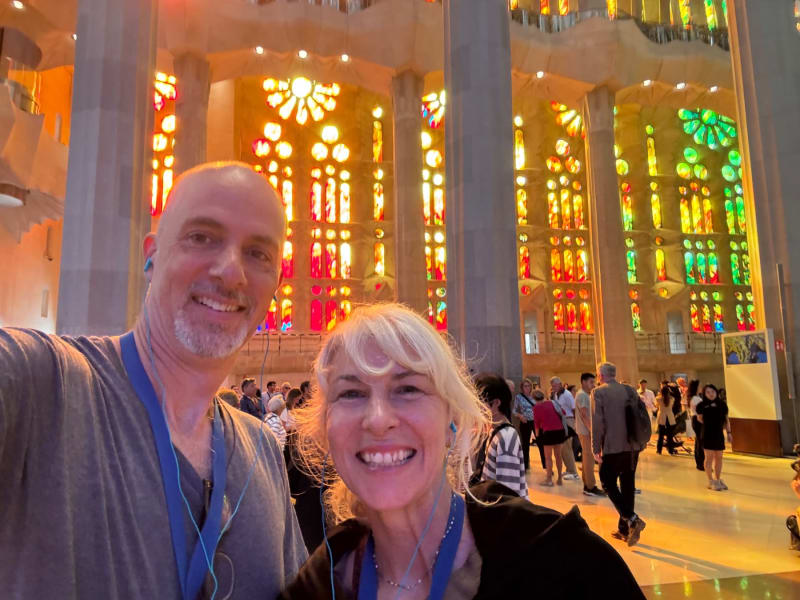
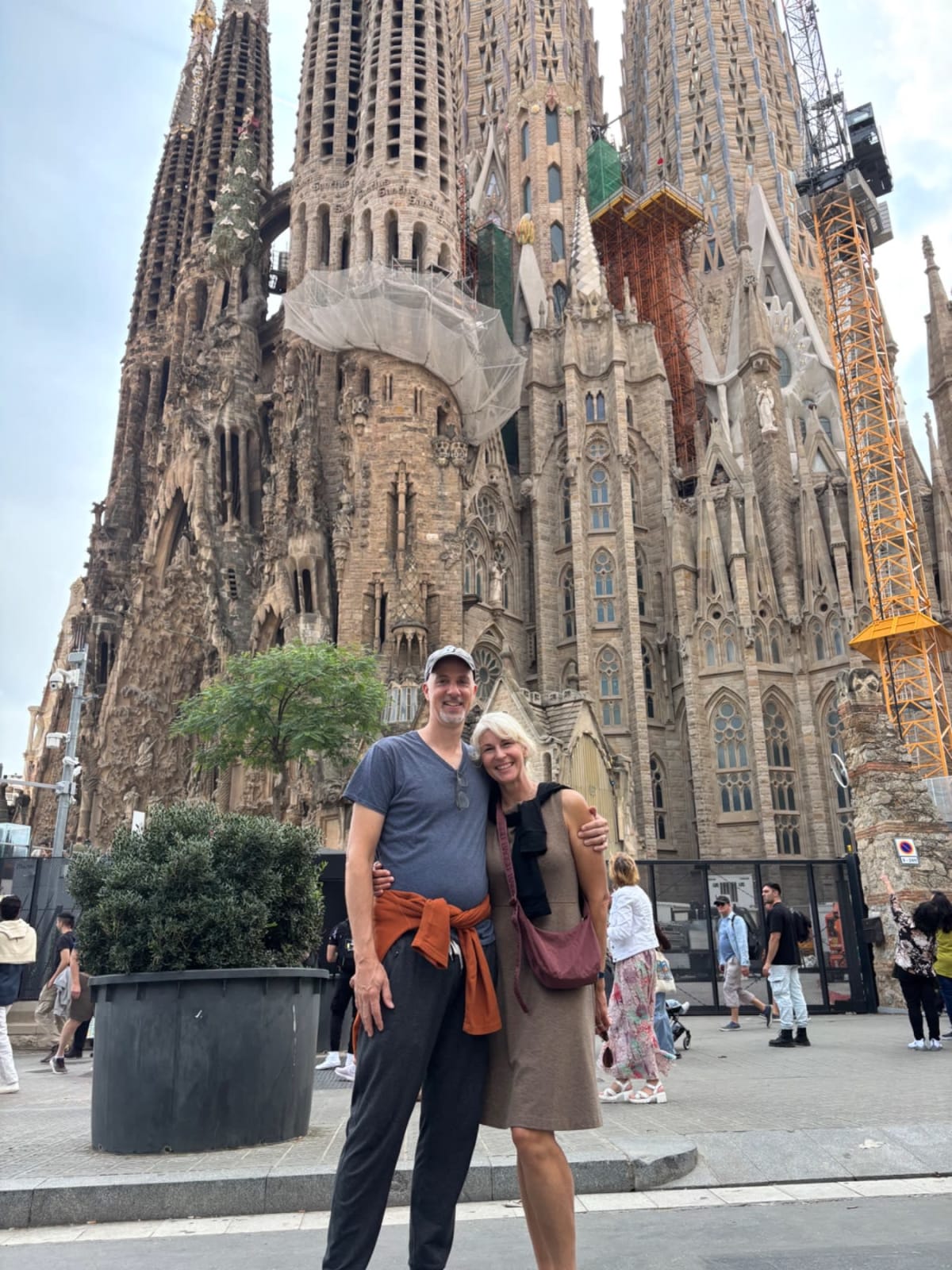
We were there before all of that was complete. The cranes were still visible in our photos, the scaffolding still wrapped around sections of the Nativity façade. It didn't matter. You don't visit Sagrada Família for a finished product. You visit it to be inside something still becoming. The Sagrada Família draws over four million visitors annually — Spain's most visited monument — and standing in the queue you understand exactly why.
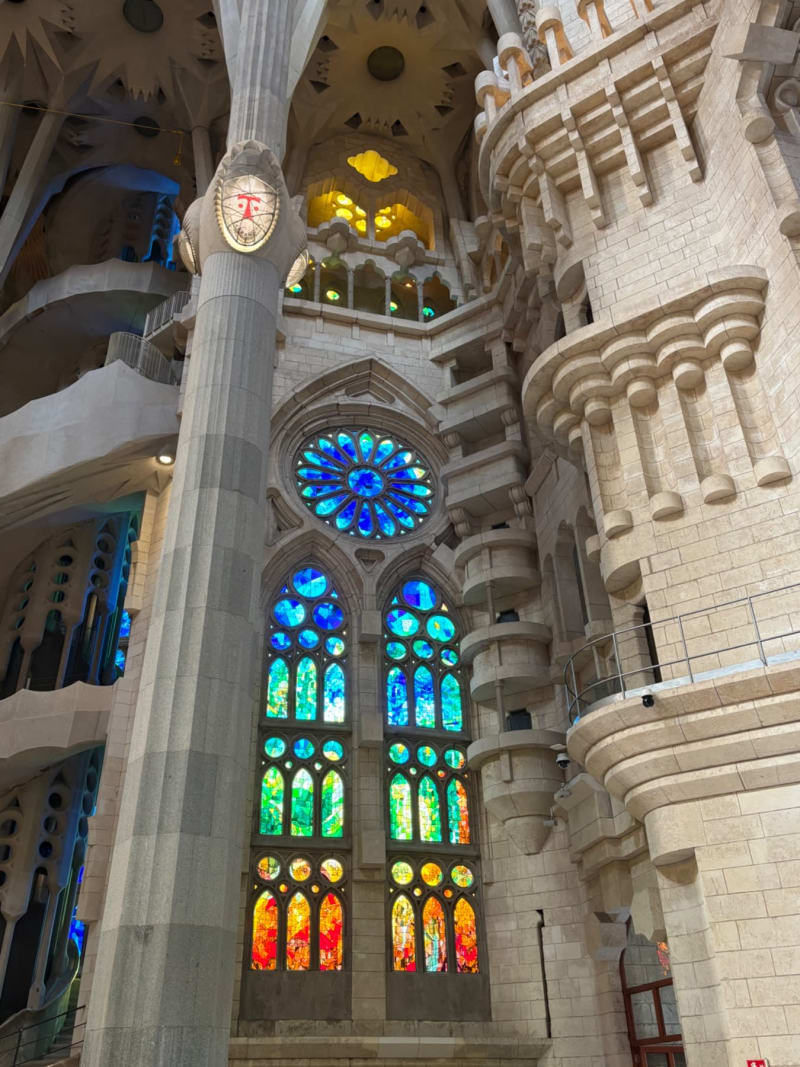
Standing outside, the scale doesn't register until you're directly beneath it. The Nativity façade — the side Gaudí completed himself — is dense with carved figures, dripping with naturalistic detail, every surface doing something. The Passion façade on the opposite side is starker, more angular, deliberately brutal in contrast. Walk the full perimeter before you go in.
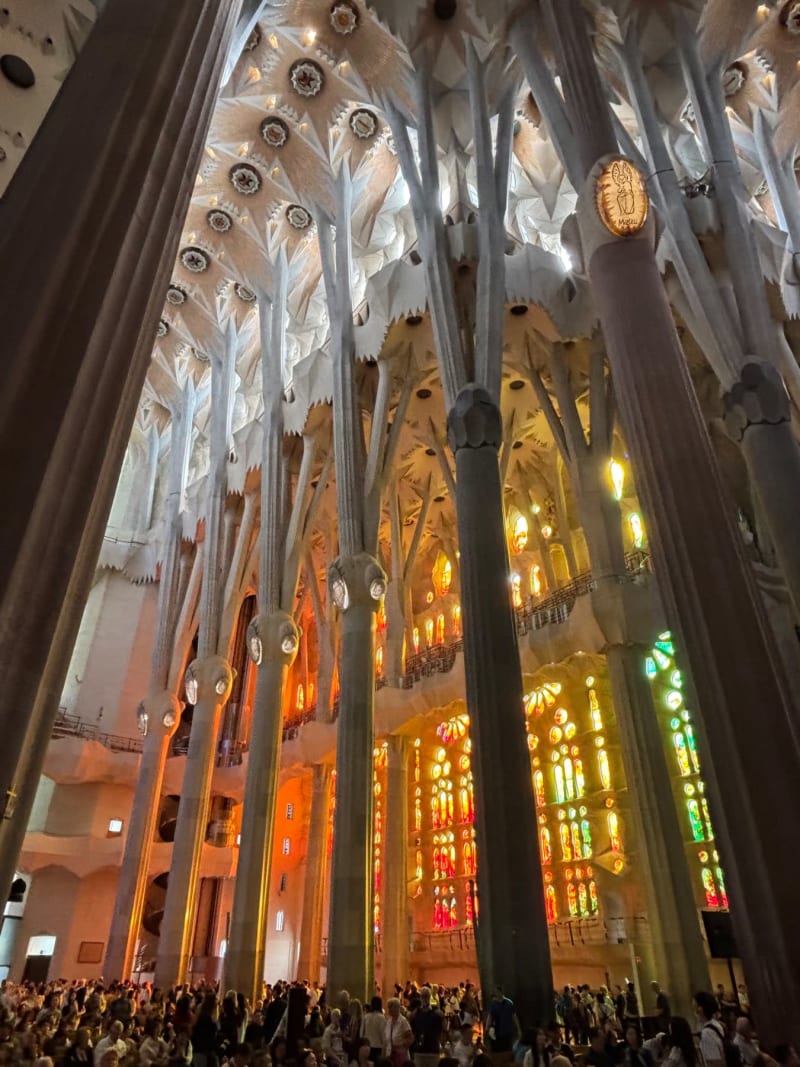
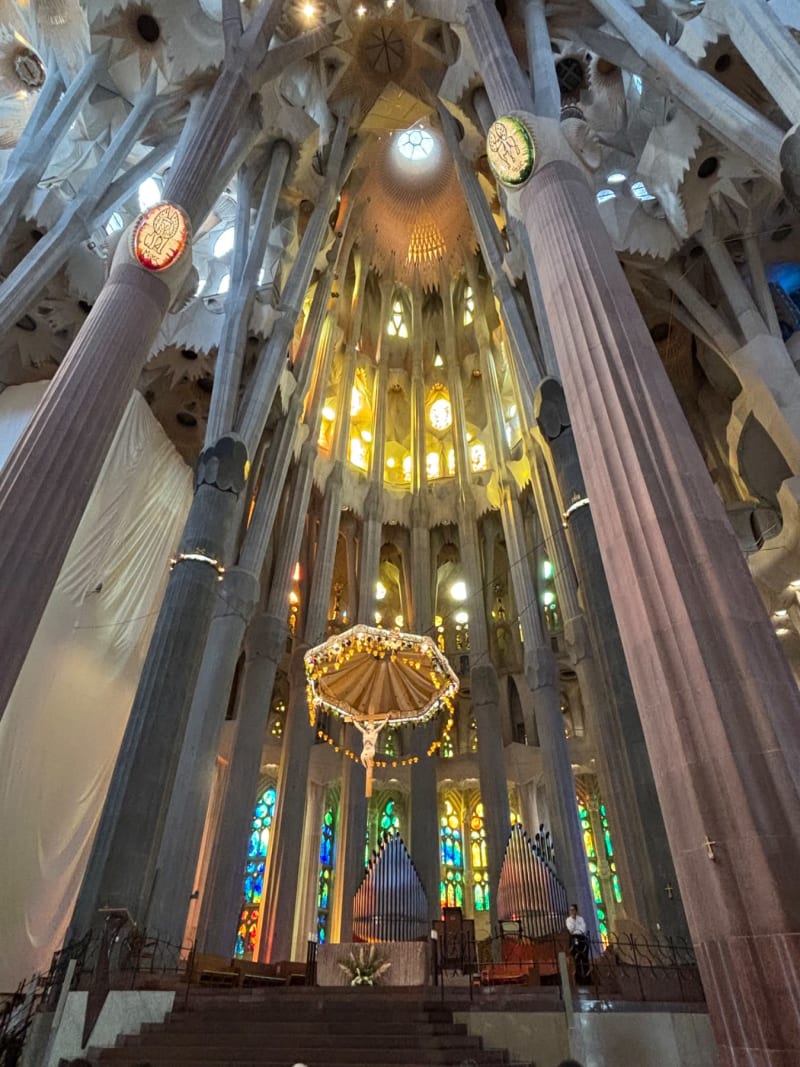
Inside is where everything changes. The columns branch upward like trees into a stone canopy overhead — there are no exact right angles to be seen inside or outside the church, and few straight lines anywhere in the design. Light pours in from both sides through stained glass that shifts from warm reds and ambers on the east to cool blues and greens on the west. Every visitor looks up within seconds of walking through the door. The space pulls your eyes toward the ceiling and holds them there.
Book tickets weeks in advance in peak season — they sell out. Include the tower climb if you can; the views over the city are remarkable. Audio guides are worth it for the detail they surface that you'd otherwise walk right past.
Park Güell: Where the City Is the Backdrop

Park Güell: Where the City Is the Backdrop
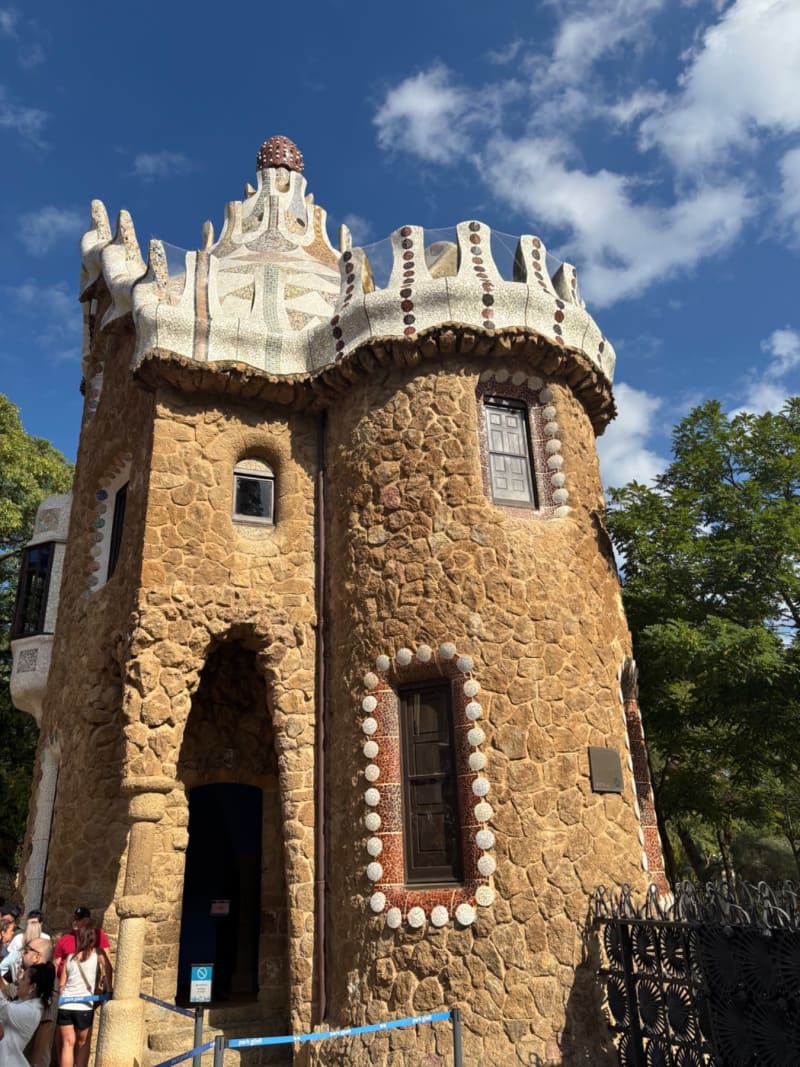
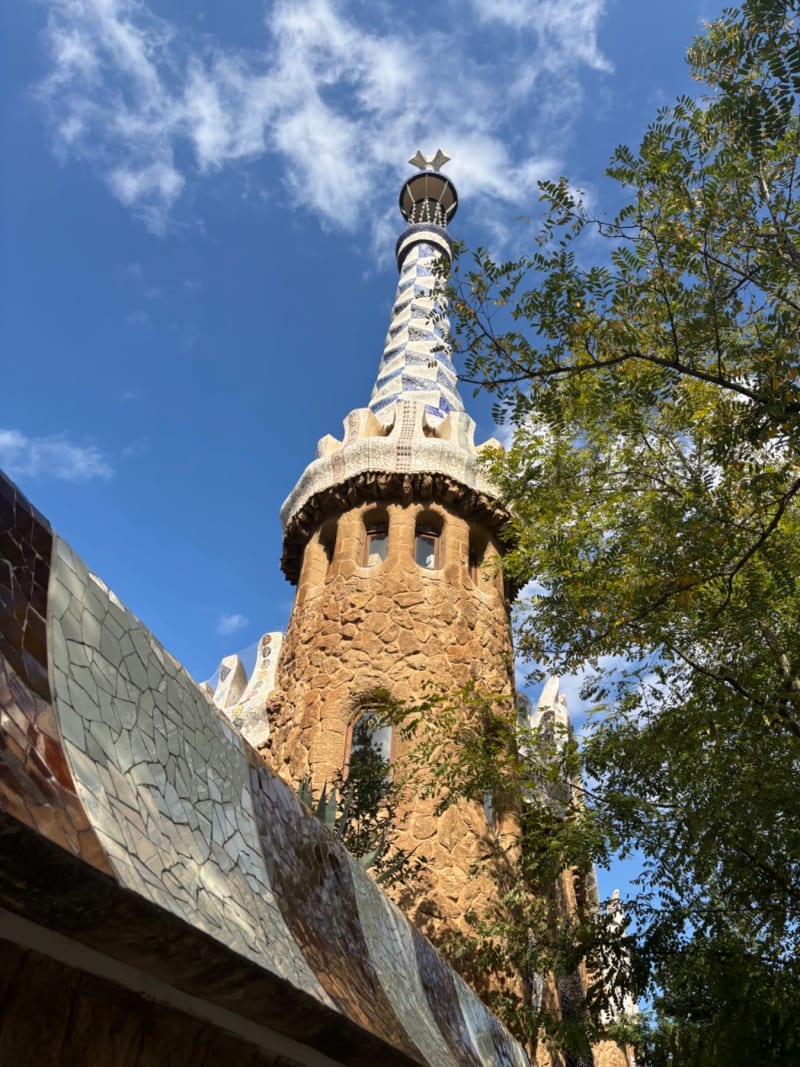
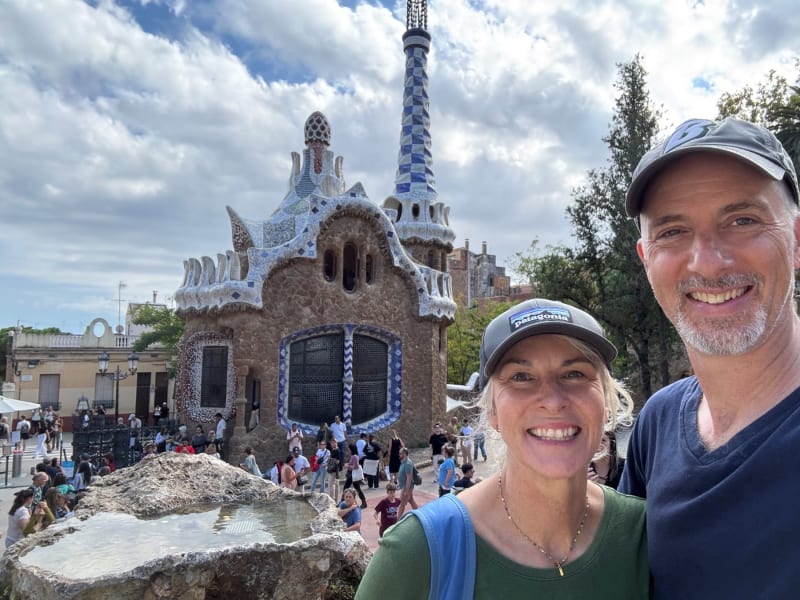
Park Güell was originally designed as a residential development — a private garden city for Barcelona's wealthy elite, conceived by Gaudí's patron Eusebi Güell around 1900. It failed commercially. Only two of the planned 60 villas were ever built — one of which Gaudí eventually purchased and lived in for twenty years. What remained was a hillside covered in his imagination, which the city of Barcelona eventually acquired and opened as a public park in 1926.
Today Park Güell welcomes over 4.4 million visitors annually, and it shows. The Monumental Zone — the ticketed core — requires timed entry, and capacity is limited to 1,400 visitors per hour to protect the site. Go early. Weekday mornings before the tour groups arrive are noticeably calmer.
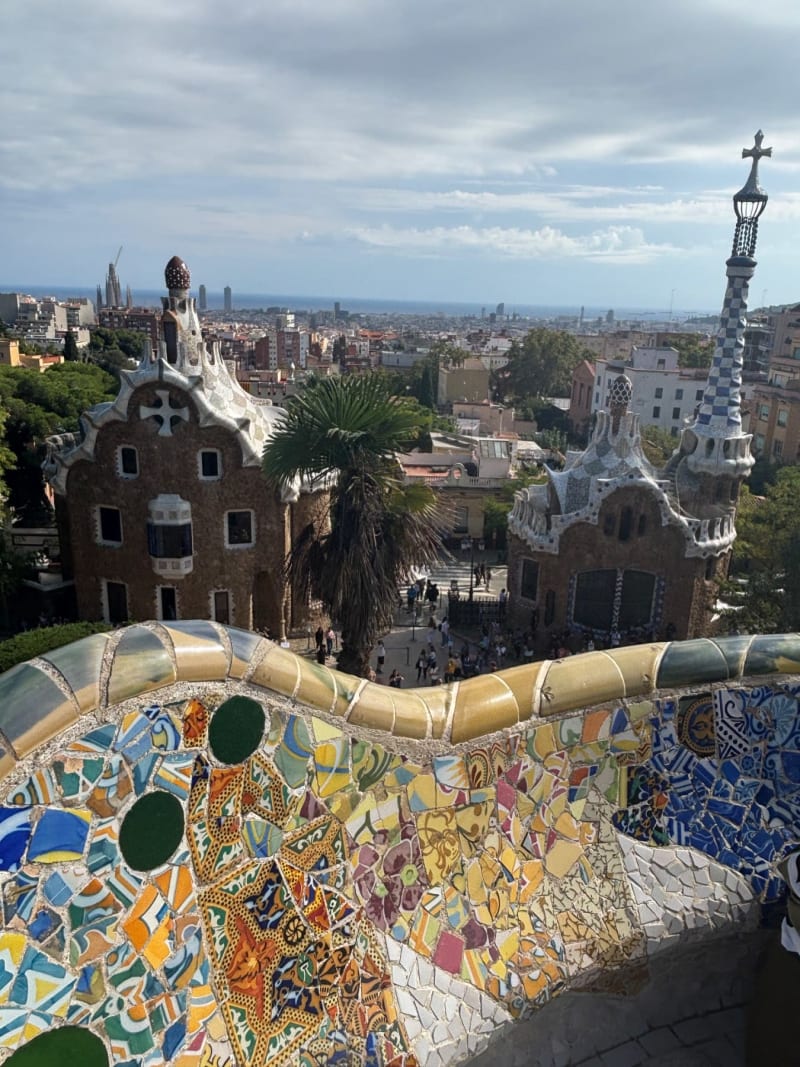
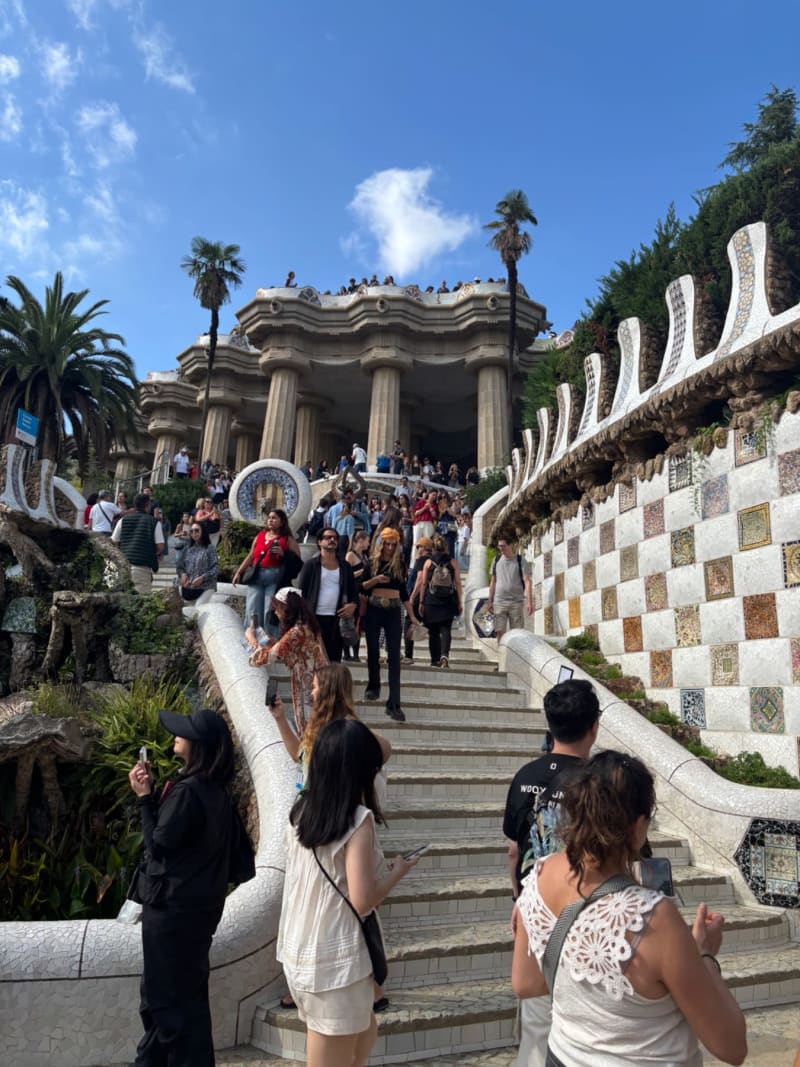
The stone viaducts below the main terrace are shadowy and cool — repeating Gothic arches in rough natural stone that feel ancient despite being less than 120 years old. The grand mosaic staircase leads up through a colonnaded market hall to the main terrace above, where the famous serpentine bench wraps the perimeter. That bench is covered in trencadís — Gaudí's technique of mosaic made from broken ceramic shards — in shifting patterns of color that move as you walk along it.
From the terrace, the view opens over the whole city to the sea. And visible above the rooftops, rising above everything, are the towers of the Sagrada Família. Gaudí could see both his projects from this bench. He lived here, walked here, looked out at the church he was building. There's something worth sitting with in that — the patience required, the faith that something this large was worth the devotion of a life.
Take Bus 116 from central Barcelona — it stops right at the entrance. Buy timed tickets before you go, not when you arrive.
La Pedrera (Casa Milà): The One on the Boulevard

La Pedrera (Casa Milà): The One on the Boulevard
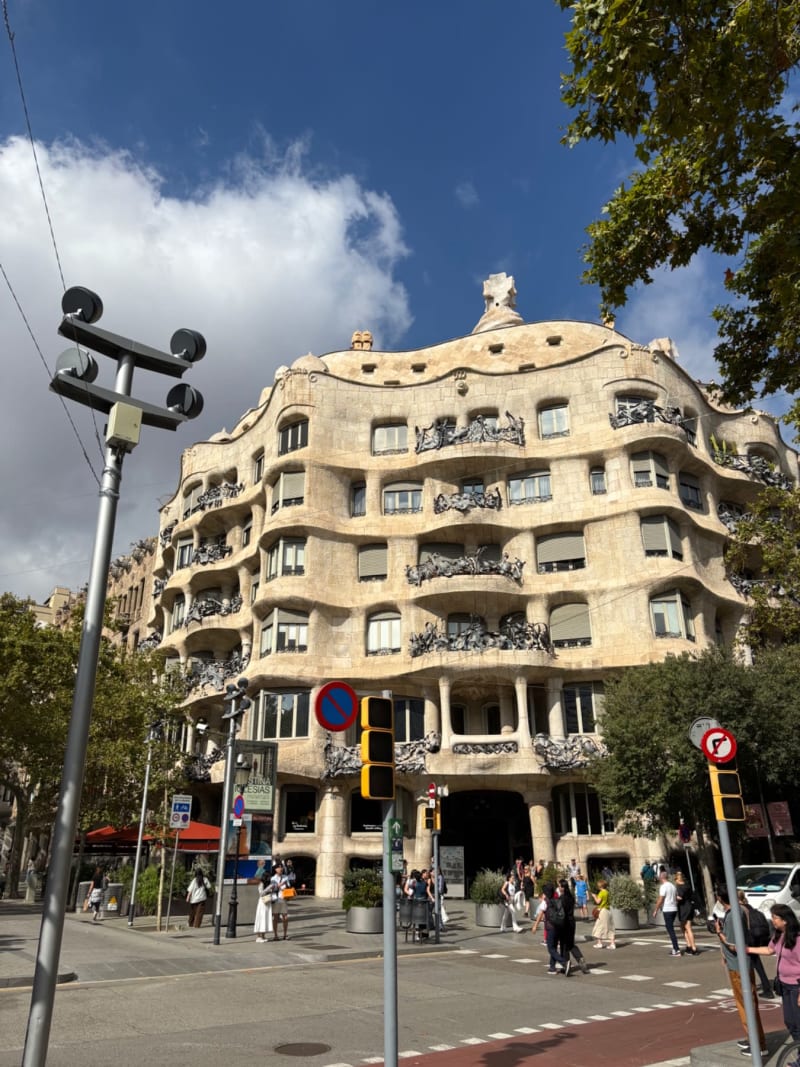
La Pedrera sits on Passeig de Gràcia about six blocks from Casa Batlló, and it stops you the same way. The facade is undulating limestone — no straight lines anywhere — with wrought-iron balconies that look like tangles of seaweed frozen mid-motion. From across the street it reads almost like a geological formation, something carved by water rather than built by hand. Locals called it La Pedrera — the stone quarry — as a joke when it went up. The name stuck.
Casa Milà was declared a UNESCO World Heritage Site in 1984, among the first monuments in Spain to receive that designation. It now attracts around 1.2 million visitors annually, and the rooftop is the reason most of them climb to the top.
Gaudí's warrior chimneys — twisted, ceramic-capped ventilation towers that stand across the roofline like armored sentinels — are the defining feature up there. The views stretch toward the sea on a clear day. The interior apartments, now open as a museum, show how Gaudí adapted his organic forms to the practicalities of daily life — curved walls, irregular rooms, every detail considered. The attic just below the roof runs through a series of 60 catenary arches that give the space the feeling of being inside a ribcage.
Book ahead, especially for late afternoon on the rooftop, when the light hits the chimneys best.
What We'd Do Differently
What We'd Do Differently
One thing surprised us more than anything else: how much the crowds recede once you're actually inside any of these places. The queues outside can feel overwhelming — the lines at Sagrada Família in particular stretch well down the block. But the spaces themselves are large enough, and strange enough, that you find your own corner of them quickly. People disperse. The architecture absorbs them.
Book everything before you arrive. Not as a suggestion — as a requirement. Sagrada Família tickets sell out weeks in advance in peak season. The night visit to Casa Batlló is a genuinely different experience from the daytime visit, and worth doing if you can manage both. Park Güell is best in the morning before the tour groups arrive. La Pedrera's rooftop is best in late afternoon.
What changed for me wasn't just the buildings themselves. It was the realization that Gaudí wasn't being eccentric for its own sake. He was paying attention — to how natural forms work, to how light moves through space, to what it feels like to stand inside something and look up. The strangeness was always the point. And once you're standing inside it, it doesn't feel strange at all.
Content ID: 7hO5hs4p3N2kATXKFpknvLFl
See an error? Tell us.

Comments
Share with the Community